
Ch. 10 Muscle Tissue and Physiology
Amerman - Human Anatomy & Physiology 2nd Edition
Amerman2nd EditionHuman Anatomy & PhysiologyISBN: 9780136873822Not the one you use?Change textbook
Chapter 10, Problem 18

What is thought to cause excess postexercise oxygen consumption?

Verified step by step guidance
1
Understand the concept of excess postexercise oxygen consumption (EPOC): EPOC refers to the increased rate of oxygen intake following strenuous activity, as the body works to restore itself to its pre-exercise state.
Recognize the physiological processes involved: During exercise, the body uses energy stores and produces metabolic byproducts like lactic acid. After exercise, the body needs to replenish oxygen levels, restore ATP (adenosine triphosphate) and creatine phosphate stores, and clear lactic acid from the muscles.
Consider the role of elevated body temperature: Exercise increases body temperature, which in turn raises the metabolic rate. This elevated metabolism persists after exercise, contributing to the need for additional oxygen.
Account for the repair and recovery processes: Postexercise, the body repairs muscle tissue and restores glycogen stores, both of which require energy and oxygen.
Summarize the main causes: EPOC is thought to be caused by a combination of factors, including oxygen replenishment, removal of metabolic byproducts, restoration of energy stores, elevated body temperature, and tissue repair processes.

Verified video answer for a similar problem:

This video solution was recommended by our tutors as helpful for the problem above.
Was this helpful?

Key Concepts

Here are the essential concepts you must grasp in order to answer the question correctly.

Excess Postexercise Oxygen Consumption (EPOC)

EPOC refers to the increased rate of oxygen intake following strenuous activity, which helps restore the body to its resting state. This phenomenon is crucial for understanding how the body recovers after exercise, as it involves processes like replenishing oxygen stores, clearing lactate, and repairing muscle tissue.
Recommended video:
Guided course
5:55
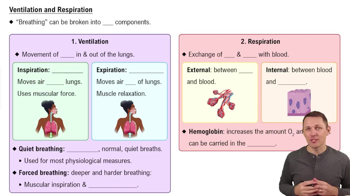
Ventilation and Respiration

Metabolic Rate

Metabolic rate is the rate at which the body expends energy or burns calories. During and after exercise, the metabolic rate increases, contributing to EPOC. Factors such as exercise intensity, duration, and individual fitness levels can influence how significantly metabolic rate rises post-exercise.
Recommended video:
02:17
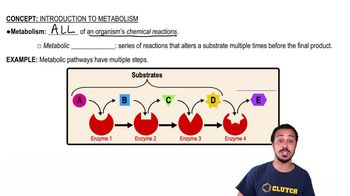
Introduction to Metabolism

Lactate Threshold

Lactate threshold is the exercise intensity at which lactate starts to accumulate in the bloodstream. When exercise exceeds this threshold, the body relies more on anaerobic metabolism, leading to greater oxygen debt and a higher EPOC as the body works to clear lactate and restore homeostasis after the activity.
Recommended video:
4:35
Transport Maximum (TM) & Renal Threshold
Related Practice
Textbook Question

Which of the following best describes single-unit smooth muscle tissue?

a. The fibers function individually.

b. It is found in organs that require precise control of contraction.

c. It contains gap junctions that couple the fibers electrically.

d. The amount of tension produced varies with the number of muscle cells recruited.

777
views
Textbook Question

Which of the following factors is/are responsible for muscular fatigue?

a. Accumulation of chemicals, including calcium and phosphate ions & increased blood flow to the muscle

b. Decreased availability of oxygen

c. Psychological and environmental factors

d. Depletion of key metabolic fuels, such as creatine phosphate

743
views
Textbook Question

Mark the following statements as true for smooth muscle tissue, cardiac muscle tissue, and/or skeletal muscle tissue.          

a. _________ Actin attaches to dense bodies.          

b. _________ Cells are joined by intercalated discs.          

c. _________ The thick and thin filaments are arranged into sarcomeres.          

d. _________ The thick filaments contain myosin heads along their entire length.          

e. _________ The cells depolarize and contract as a unit.          

f. _________ Ca2+ binding to troponin is the initiating event of contraction.          

g. _________ Ca2+ binding to calmodulin is the initiating event of contraction.          

h. _________ The sarcolemma has a distinct motor end plate.

758
views
Textbook Question

Which of the following is not likely to result from endurance training alone?

a. Increase in oxidative enzymes in the muscle fiber

b. Increased numbers of mitochondria

c. Hypertrophy of the muscle fibers

d. Increase in blood supply to the muscle fibers

816
views
Textbook Question

Resistance-type activities will likely rely on _______ energy sources, whereas endurance activities will probably rely on _____ energy sources.

744
views
Textbook Question

List some of the functions of smooth muscle tissue.

1000
views