Ch. 13 The Peripheral Nervous System
Amerman - Human Anatomy & Physiology 2nd Edition
Amerman2nd EditionHuman Anatomy & PhysiologyISBN: 9780136873822Not the one you use?Change textbook
Chapter 13, Problem 13

List and describe the basic steps involved in producing movement, beginning with the upper motor neurons in the cerebral cortex.

Verified step by step guidance
1
Identify the role of the upper motor neurons in the cerebral cortex: These neurons initiate voluntary movement by sending signals to lower motor neurons. They are located in the primary motor cortex, which is part of the frontal lobe of the brain.
Explain the pathway of the signal through the corticospinal tract: The signal travels from the upper motor neurons down through the corticospinal tract, which is a major descending motor pathway. This pathway crosses over (decussates) at the medulla oblongata, ensuring that the right side of the brain controls the left side of the body and vice versa.
Describe the synapse with lower motor neurons: The upper motor neurons synapse with lower motor neurons in the anterior horn of the spinal cord. These lower motor neurons are responsible for directly innervating skeletal muscles.
Detail the role of the neuromuscular junction: The lower motor neurons release the neurotransmitter acetylcholine at the neuromuscular junction, which binds to receptors on the muscle fiber, triggering an action potential in the muscle.
Explain the muscle contraction process: The action potential travels along the sarcolemma and into the T-tubules, leading to the release of calcium ions from the sarcoplasmic reticulum. Calcium binds to troponin, causing a conformational change that allows actin and myosin filaments to interact, resulting in muscle contraction and movement.

Verified video answer for a similar problem:

This video solution was recommended by our tutors as helpful for the problem above.
Was this helpful?

Key Concepts

Here are the essential concepts you must grasp in order to answer the question correctly.

Upper Motor Neurons

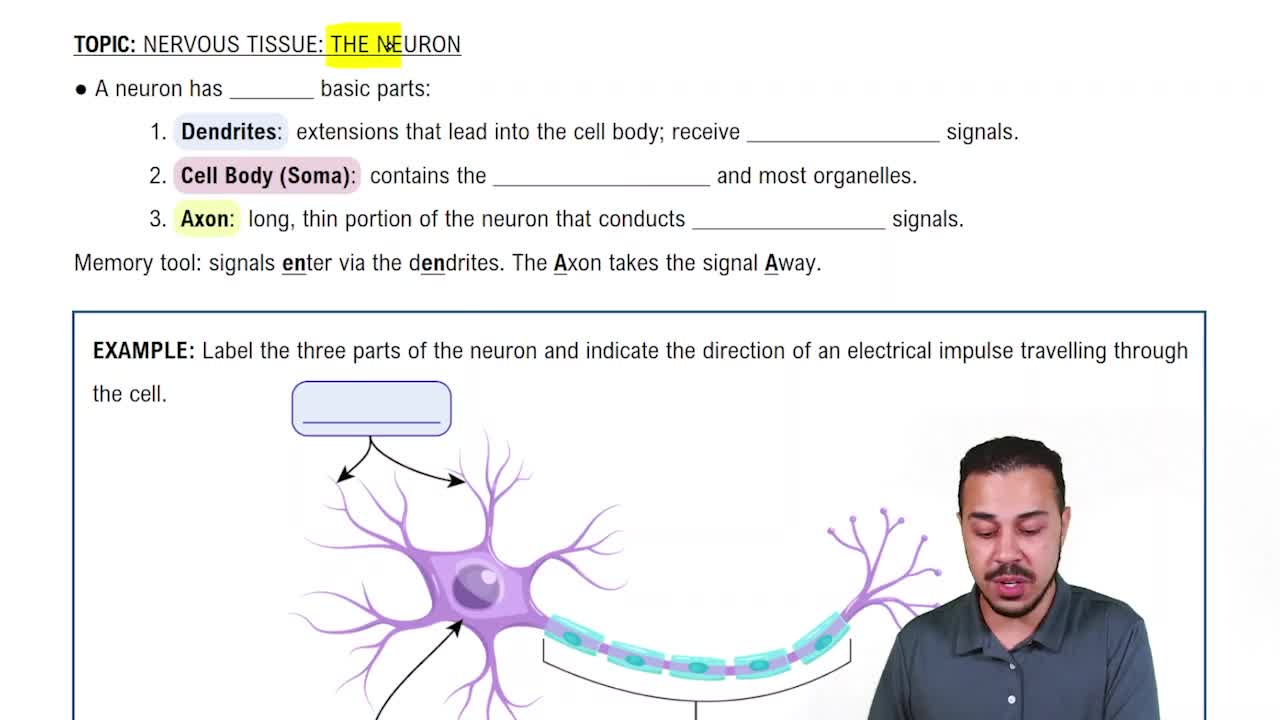
Upper motor neurons are located in the cerebral cortex and are responsible for initiating voluntary movements. They send signals down through the spinal cord to lower motor neurons, which directly innervate skeletal muscles. Understanding their role is crucial for grasping how movement is initiated and coordinated in the body.
Recommended video:

Lower Motor Neurons

Lower motor neurons reside in the spinal cord and brainstem, receiving input from upper motor neurons. They transmit signals to skeletal muscles, causing contraction and movement. Their function is essential for translating the commands from the brain into actual physical actions, making them a key component in the movement process.
Recommended video:

Motor Pathways

Motor pathways are the neural routes that connect the upper motor neurons in the brain to the lower motor neurons in the spinal cord. These pathways include various tracts, such as the corticospinal tract, which facilitate the transmission of motor commands. Understanding these pathways is vital for comprehending how the brain controls movement and the potential impacts of injuries or diseases affecting them.
Recommended video:
4:40
Alternative Pathway