
Ch. 16 The Endocrine System
Amerman - Human Anatomy & Physiology 2nd Edition
Amerman2nd EditionHuman Anatomy & PhysiologyISBN: 9780136873822Not the one you use?Change textbook
Chapter 16, Problem 18

Explain how insulin and glucagon are antagonists.

Verified step by step guidance
1
Understand the role of insulin and glucagon in maintaining blood glucose levels: Insulin lowers blood glucose levels by promoting the uptake of glucose into cells and its storage as glycogen, while glucagon raises blood glucose levels by stimulating glycogen breakdown and glucose release into the bloodstream.
Recognize the opposing effects of insulin and glucagon: Insulin is secreted by beta cells of the pancreas in response to high blood glucose levels, whereas glucagon is secreted by alpha cells of the pancreas in response to low blood glucose levels.
Learn the mechanism of insulin action: Insulin binds to receptors on target cells (e.g., muscle, liver, and fat cells), triggering a signaling cascade that increases glucose transport into cells and promotes glycogenesis (formation of glycogen).
Understand the mechanism of glucagon action: Glucagon binds to receptors on liver cells, activating a signaling pathway that stimulates glycogenolysis (breakdown of glycogen into glucose) and gluconeogenesis (production of glucose from non-carbohydrate sources).
Appreciate the balance between insulin and glucagon: These hormones work antagonistically to maintain blood glucose homeostasis, ensuring that glucose levels remain within a healthy range despite fluctuations in dietary intake or energy demands.

Verified video answer for a similar problem:

This video solution was recommended by our tutors as helpful for the problem above.
Was this helpful?

Key Concepts

Here are the essential concepts you must grasp in order to answer the question correctly.

Insulin

Insulin is a hormone produced by the pancreas that plays a crucial role in regulating blood glucose levels. It facilitates the uptake of glucose by cells, promoting its use for energy or storage as glycogen in the liver and muscles. When blood sugar levels rise after eating, insulin is released to lower these levels, ensuring that the body has a steady supply of energy.
Recommended video:
Guided course
4:31
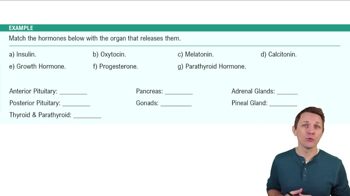
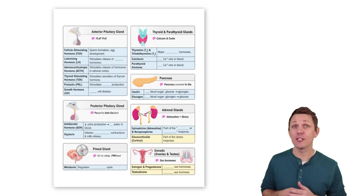
Hormone Review Table Example 1

Glucagon

Glucagon is another hormone produced by the pancreas, but it has the opposite effect of insulin. It is released when blood glucose levels are low, stimulating the liver to convert stored glycogen back into glucose and release it into the bloodstream. This process helps to raise blood sugar levels, providing energy to the body when it is needed most, such as between meals or during physical activity.
Recommended video:
Guided course
4:31
Hormone Review Table Example 1

Hormonal Antagonism

Hormonal antagonism refers to the opposing actions of hormones that regulate physiological processes. In the case of insulin and glucagon, they work in tandem to maintain homeostasis in blood glucose levels. When insulin lowers blood sugar, glucagon counteracts this effect by increasing it, illustrating how these hormones balance each other to ensure the body functions optimally.
Recommended video:
Guided course
13:06
Review of Major Hormones
Related Practice
Textbook Question

Match the following hormones with their correct descriptions. 

Leptin      

Atrial natriuretic peptide      

Melatonin      

Estrogens      

Erythropoietin      

Testosterone

a. Produced by the pineal gland; regulates the sleep/wake cycle

b. Produced by the kidneys; regulates red blood cell production

c. Produced by the heart; promotes sodium ion loss in the kidneys and vasodilation

d. Produced by the testes; promotes androgenic and anabolic actions

e. Produced by adipose tissue; promotes satiety

f. Produced by the ovaries; regulate the menstrual cycle and the development of secondary sex characteristics

1419
views
Textbook Question

Type 1 diabetes mellitus is characterized by______, and type 2 diabetes mellitus is characterized by_____.

a. hypoglycemia; destruction of the pancreatic β cells

b. destruction of the pancreatic β cells; destruction of the pancreatic α cells

c. insulin resistance; destruction of the pancreatic β cells

d. destruction of the pancreatic β cells; insulin resistance

1234
views
Textbook Question

Which of the following statements about the adrenal medulla is false?

a. Secretion from the adrenal medulla is triggered by ACTH and the sympathetic nervous system.

b. The adrenal medulla consists of glandular epithelial cells.

c. The adrenal medulla is a modified postsynaptic sympathetic ganglion.

d. The products of the adrenal medulla prolong the effects of the sympathetic response.

713
views
Textbook Question

The hormone that directly stimulates the hunger center is:

a. Ghrelin

b. Cholecystokinin

c. Insulin

d. Leptin

763
views
Textbook Question

Mark the following statements as true or false. If a statement is false, correct it to make a true statement.

Both ADH and aldosterone increase the amount of water in the body and decrease the solute concentration of the blood.

1102
views
Textbook Question

Which of the following hormones is not an integral part of the stress response?

a. Epinephrine

b. Cortisol

c. Insulin

d. Glucagon

1067
views