
Ch. 11 Introduction to the Nervous System and Nervous Tissue
Amerman - Human Anatomy & Physiology 2nd Edition
Amerman2nd EditionHuman Anatomy & PhysiologyISBN: 9780136873822Not the one you use?Change textbook
Chapter 11, Problem L3.3

Albert accidentally ingests the poison tetrodotoxin from the pufferfish, which you know blocks voltage-gated Na+ channels. Predict the symptoms Albert will experience from this poisoning.

Verified step by step guidance
1
Understand the role of voltage-gated Na+ channels: These channels are essential for the generation and propagation of action potentials in neurons and muscle cells. They allow sodium ions (Na⁺) to enter the cell, depolarizing the membrane and enabling communication between cells.
Recognize the effect of tetrodotoxin: Tetrodotoxin blocks voltage-gated Na⁺ channels, preventing sodium ions from entering the cell. This inhibits the initiation and propagation of action potentials, effectively disrupting neural and muscular communication.
Predict the impact on the nervous system: Without action potentials, Albert's nervous system will be unable to transmit signals. This can lead to symptoms such as numbness, tingling, and paralysis, as motor and sensory neurons are affected.
Consider the impact on the respiratory system: The diaphragm and other respiratory muscles rely on action potentials to contract. Blocking these signals can result in respiratory failure, as the muscles cannot function properly to facilitate breathing.
Summarize the systemic effects: Albert may experience symptoms such as muscle weakness, paralysis, loss of sensation, difficulty breathing, and potentially life-threatening respiratory failure. Immediate medical attention is critical to manage these symptoms and prevent fatal outcomes.

Verified video answer for a similar problem:

This video solution was recommended by our tutors as helpful for the problem above.
Was this helpful?

Key Concepts

Here are the essential concepts you must grasp in order to answer the question correctly.

Tetrodotoxin

Tetrodotoxin is a potent neurotoxin found in certain species of pufferfish. It works primarily by blocking voltage-gated sodium channels in nerve cells, preventing the influx of sodium ions necessary for action potentials. This disruption in neuronal signaling can lead to paralysis and respiratory failure, making it a critical substance to understand in toxicology.

Voltage-Gated Sodium Channels

Voltage-gated sodium channels are integral membrane proteins that open in response to changes in membrane potential, allowing sodium ions to flow into the cell. This influx is essential for the generation and propagation of action potentials in neurons and muscle cells. When these channels are blocked, as with tetrodotoxin, it results in a failure of nerve impulse transmission, leading to various neurological symptoms.
Recommended video:
03:40
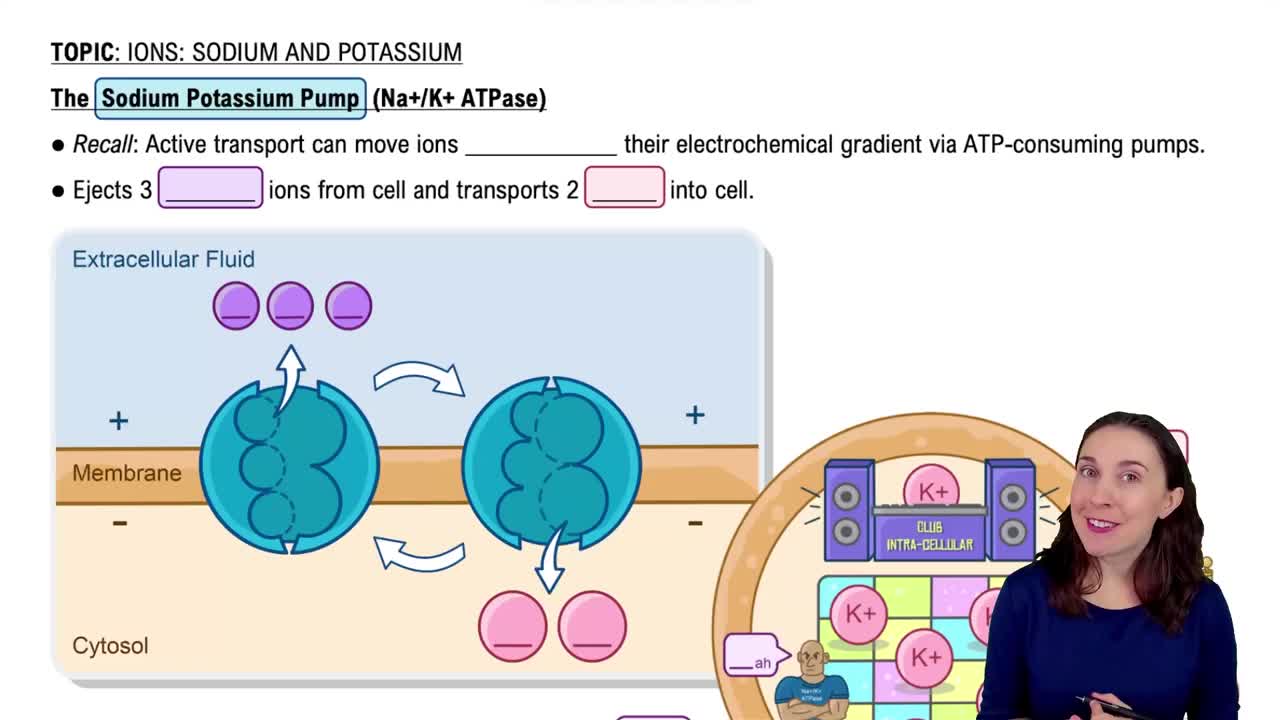
The Sodium Potassium Pump

Symptoms of Poisoning

Symptoms of tetrodotoxin poisoning can include numbness, tingling, muscle weakness, and paralysis, particularly in the limbs and respiratory muscles. The severity of symptoms can escalate to respiratory failure and potentially death if not treated promptly. Understanding these symptoms is crucial for recognizing and managing cases of poisoning effectively.
Recommended video:
Guided course
3:26
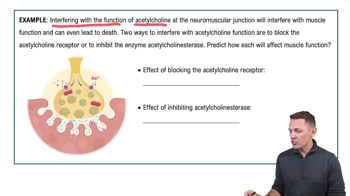
Steps of Muscle Contraction Example 3
Related Practice