
Ch. 24 The Urinary System
Amerman - Human Anatomy & Physiology 2nd Edition
Amerman2nd EditionHuman Anatomy & PhysiologyISBN: 9780136873822Not the one you use?Change textbook
Chapter 24, Problem 3a

Mark the following statements as true or false. If a statement is false, correct it to make a true statement.
a. The kidneys are retroperitoneal and covered by three layers of connective tissue.

Verified step by step guidance
1
Understand the term 'retroperitoneal': This means that the kidneys are located behind the peritoneum, the membrane lining the abdominal cavity. This is a true anatomical fact about the kidneys.
Review the connective tissue layers surrounding the kidneys: The kidneys are indeed covered by three layers of connective tissue. These layers are the renal fascia (outermost layer), the adipose capsule (middle layer), and the renal capsule (innermost layer).
Evaluate the first part of the statement: 'The kidneys are retroperitoneal.' This is true based on the anatomical location of the kidneys.
Evaluate the second part of the statement: 'The kidneys are covered by three layers of connective tissue.' This is also true based on the structure of the kidney's protective layers.
Conclude the analysis: Since both parts of the statement are accurate, the statement is true and does not require correction.

Verified video answer for a similar problem:

This video solution was recommended by our tutors as helpful for the problem above.
Was this helpful?

Key Concepts

Here are the essential concepts you must grasp in order to answer the question correctly.

Retroperitoneal Organs

Retroperitoneal organs are those located behind the peritoneum, the lining of the abdominal cavity. The kidneys are classified as retroperitoneal because they lie outside the peritoneal cavity, which allows them to be positioned against the posterior abdominal wall. This anatomical positioning is significant for understanding their relationships with surrounding structures.
Recommended video:
Guided course
05:04
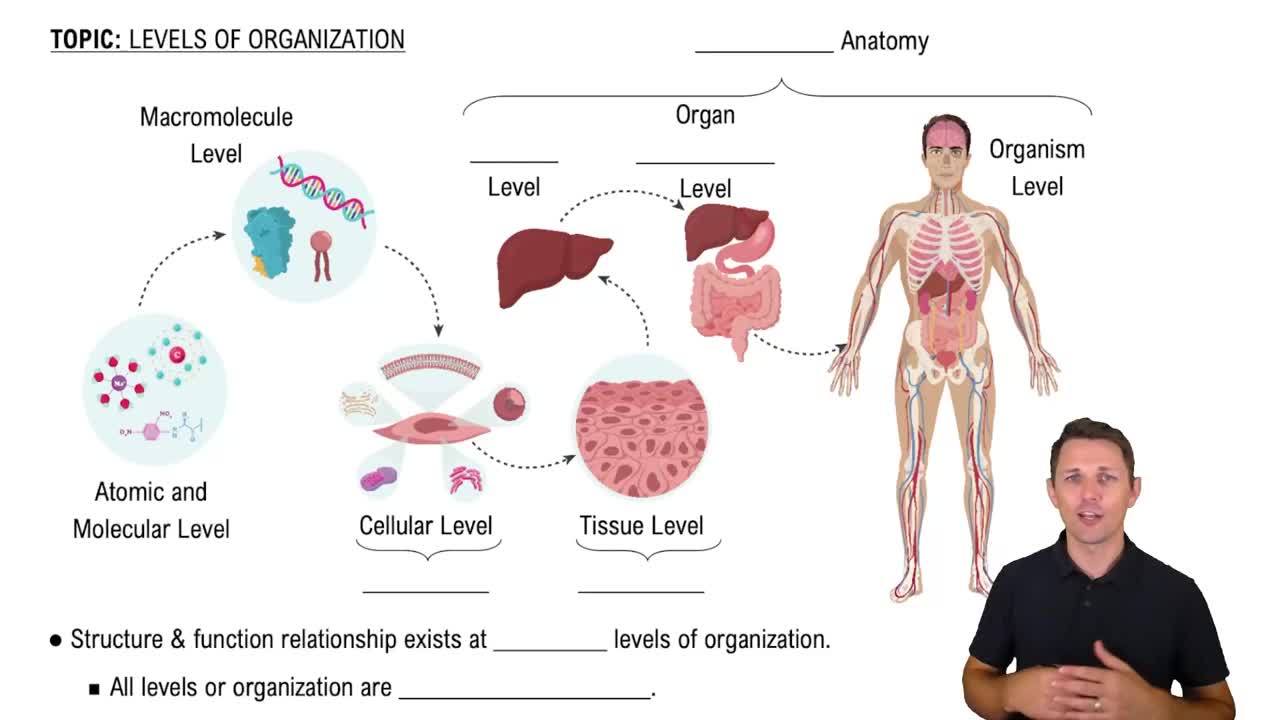
The Levels of Organization

Connective Tissue Layers

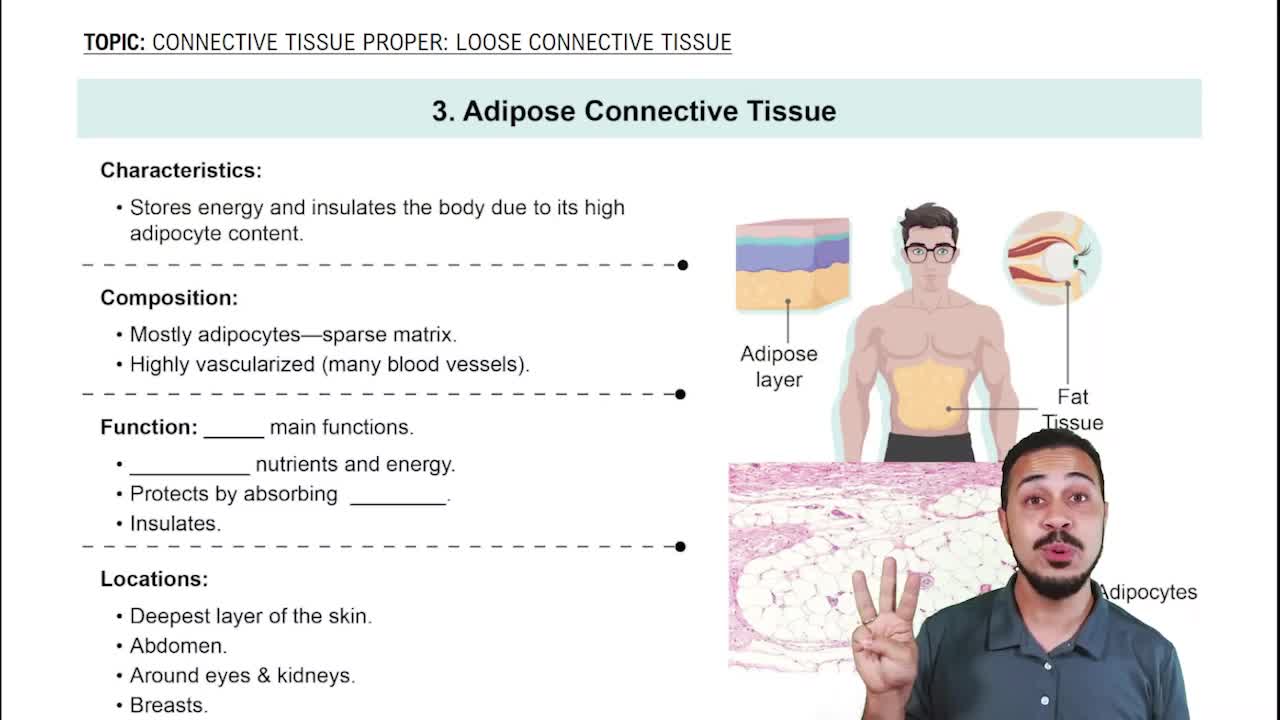
The kidneys are protected by three layers of connective tissue: the renal fascia, perirenal fat capsule, and fibrous capsule. The renal fascia is a layer of connective tissue that anchors the kidneys to surrounding structures, while the perirenal fat capsule provides cushioning and insulation. The fibrous capsule is a tough outer layer that directly encases the kidney, offering additional protection.
Recommended video:
Guided course
07:17
Adipose Connective Tissue

Anatomical Positioning of the Kidneys

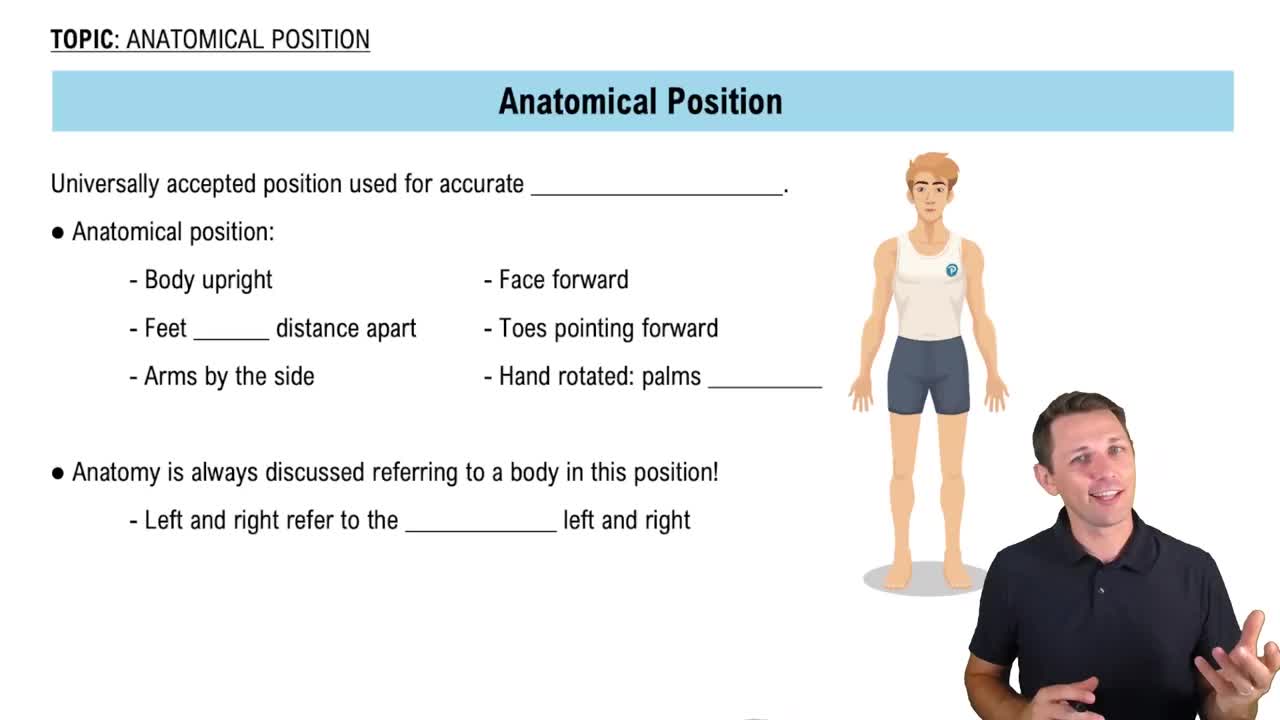
Understanding the anatomical positioning of the kidneys is crucial for recognizing their function and relation to other organs. The kidneys are located at the level of the T12 to L3 vertebrae, with the right kidney typically positioned slightly lower than the left due to the presence of the liver. This positioning is important for surgical approaches and understanding potential pathologies.
Recommended video:
Guided course
02:40
Anatomical Position
Related Practice
Textbook Question

Mr. Gupta has been diagnosed with nephrotic syndrome, which is characterized by the loss of plasma proteins such as albumin into the urine. What impact will this have on his colloid osmotic pressure? How will this affect the net filtration pressure in his capillary beds? What effect will this likely cause?

860
views
Textbook Question

Explain how each of the drugs in question 1 from this section would lower blood pressure.

803
views
Textbook Question

Deana is a 4-year-old girl with a rare genetic defect that causes the Na+/glucose symporters in the proximal tubule to reabsorb fewer glucose and sodium ions than normal. Predict the effects this defect will have on the composition and volume of Deana's urine. Explain why you would expect to see increased activity of the tubuloglomerular feedback and the renin-angiotensin-aldosterone system in Deana's kidneys.

705
views
Textbook Question

Mark the following statements as true or false. If a statement is false, correct it to make a true statement.

d. Filtrate flows from the renal corpuscle to the distal tubule, the nephron loop, the proximal tubule, and into the collecting system.

635
views
Textbook Question

Mark the following statements as true or false. If a statement is false, correct it to make a true statement.

c. The first capillary bed of the kidneys is the peritubular capillaries, which are fed by the afferent arteriole and drained by the efferent arteriole.

816
views
1
rank
Textbook Question

Mark the following statements as true or false. If a statement is false, correct it to make a true statement.

b. Internally, the kidneys consist of an outer renal medulla, a middle renal pelvis, and an inner renal cortex.

853
views
1
rank