
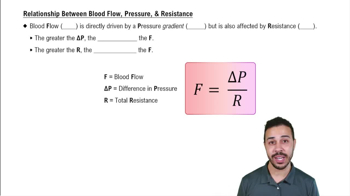
An increase in preload causes a/an ________ in stroke volume in accordance with the ________ law. An increase in afterload causes a/an ________ in stroke volume. An increase in contractility causes a/an ________ in stroke volume.
Mark the following statements as true or false. If a statement is false, correct it to make a true statement.
Tissue perfusion to the heart decreases during systole and increases during diastole.
Verified step by step guidance
Verified video answer for a similar problem:
Key Concepts
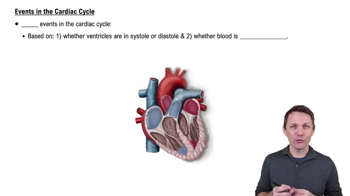
Cardiac Cycle
Tissue Perfusion
Coronary Blood Flow
Mark the following statements as true or false. If a statement is false, correct it to make a true statement.
The amount of blood in the ventricles at the end of the ventricular filling phase is the end-systolic volume.
Mark the following statements as true or false. If a statement is false, correct it to make a true statement.
The ventricular ejection phase generally correlates with the S-T segment and the T wave on the ECG.
The first heart sound is called ________ and it is caused by the closing of the ________ valves. It occurs at the beginning of the ________ phase of the cardiac cycle. The second heart sound is called ________ and it is caused by the closing of the ________ valves. It occurs at the beginning of the ________ phase of the cardiac cycle.
Cardiac output is equal to:
a. End-diastolic volume minus end-systolic volume.
b. Heart rate multiplied by stroke volume.
c. Stroke volume divided by end-diastolic volume.
d. Heart rate multiplied by preload.
Which chamber generates the highest pressure during systole?
a. Right atrium
b. Right ventricle
c. Left atrium
d. Left ventricle
