Ch. 9 The Muscular System
Amerman - Human Anatomy & Physiology 2nd Edition
Amerman2nd EditionHuman Anatomy & PhysiologyISBN: 9780136873822Not the one you use?Change textbook
Chapter 9, Problem 1b

Mark the following statements as true or false. If a statement is false, correct it to make a true statement.
The common function of all types of muscle tissue is to generate tension.

Verified step by step guidance
1
Understand the problem: The question asks whether the statement 'The common function of all types of muscle tissue is to generate tension' is true or false. If false, we need to correct it to make it true.
Recall the three types of muscle tissue: skeletal muscle, cardiac muscle, and smooth muscle. Each has unique characteristics but shares some common functions.
Review the primary function of muscle tissue: All muscle tissues have the ability to contract, which generates tension. This tension can result in movement (e.g., skeletal muscles moving bones), maintaining posture, or regulating internal processes (e.g., smooth muscle in blood vessels).
Determine the accuracy of the statement: Since generating tension is a fundamental property of all muscle tissues, the statement is true. No correction is needed.
Conclude the analysis: The statement is true as written, and no further action is required.

Verified video answer for a similar problem:

This video solution was recommended by our tutors as helpful for the problem above.
Was this helpful?

Key Concepts

Here are the essential concepts you must grasp in order to answer the question correctly.

Muscle Tissue Types

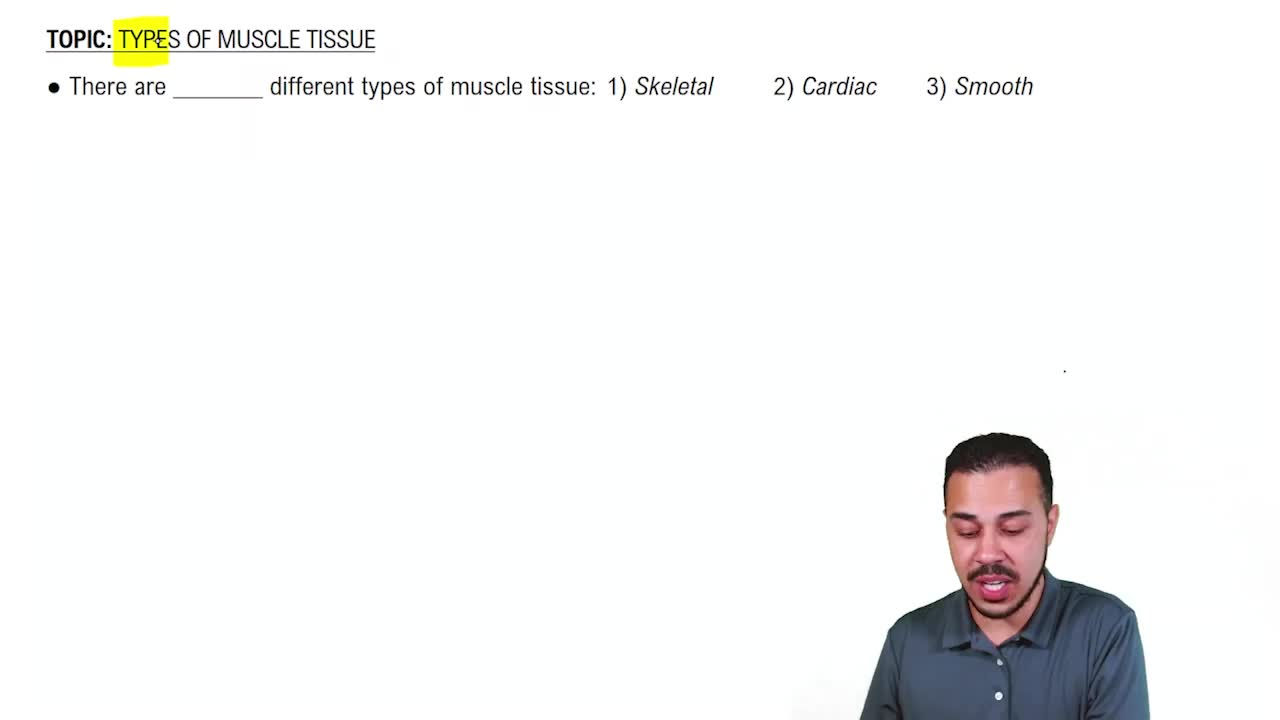
There are three main types of muscle tissue: skeletal, cardiac, and smooth. Skeletal muscle is under voluntary control and is responsible for movement, cardiac muscle is involuntary and makes up the heart, while smooth muscle is also involuntary and lines hollow organs. Understanding these types is essential for recognizing their specific functions and characteristics.
Recommended video:
Guided course
00:36
3 Types of Muscle Tissue

Muscle Contraction

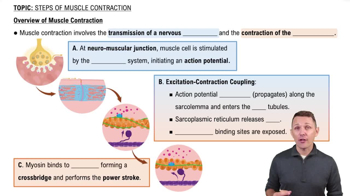
Muscle contraction is the process by which muscle fibers generate tension and shorten, allowing for movement. This process involves the sliding filament theory, where actin and myosin filaments within the muscle fibers interact. The ability to generate tension is a fundamental function of all muscle types, although the mechanisms and outcomes may differ.
Recommended video:
Guided course
4:53
Overview of Muscle Contraction

Tension Generation

Tension generation is the primary function of muscle tissue, allowing for movement and stability in the body. This tension can be voluntary, as in skeletal muscle during exercise, or involuntary, as in cardiac and smooth muscle during bodily functions. Recognizing that all muscle types share this common function helps clarify their roles in the body.
Recommended video:
14:36
General Blood Vessel Structure