Ch. 24 The Urinary System
Amerman - Human Anatomy & Physiology 2nd Edition
Amerman2nd EditionHuman Anatomy & PhysiologyISBN: 9780136873822Not the one you use?Change textbook
Chapter 24, Problem L2.1c

Predict the effects the following scenarios would have on glomerular filtration:
c. Having high arterial blood pressure (hypertension)

Verified step by step guidance
1
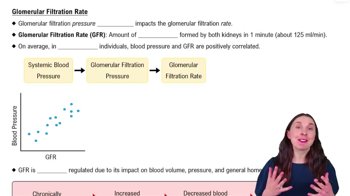
Understand the relationship between arterial blood pressure and glomerular filtration rate (GFR): Glomerular filtration is the process by which the kidneys filter blood to form urine. The glomerular filtration rate is influenced by the pressure in the glomerular capillaries, which is directly affected by arterial blood pressure.
Recall the role of autoregulation in the kidneys: The kidneys have mechanisms like the myogenic response and tubuloglomerular feedback to maintain a relatively stable GFR despite changes in blood pressure. However, in cases of sustained high arterial blood pressure (hypertension), these mechanisms may be overwhelmed.
Analyze the immediate effect of high arterial blood pressure: Increased arterial blood pressure raises the hydrostatic pressure in the glomerular capillaries. This can lead to an increase in the net filtration pressure, which may initially increase the GFR.
Consider the long-term effects of hypertension: Chronic hypertension can damage the glomerular capillaries and lead to a loss of filtration surface area. Over time, this can reduce the GFR and impair kidney function.
Summarize the overall impact: High arterial blood pressure initially increases the GFR due to elevated hydrostatic pressure, but prolonged hypertension can lead to kidney damage, reducing the GFR and potentially causing chronic kidney disease.

Verified video answer for a similar problem:

This video solution was recommended by our tutors as helpful for the problem above.
Was this helpful?

Key Concepts

Here are the essential concepts you must grasp in order to answer the question correctly.

Glomerular Filtration Rate (GFR)

GFR is the rate at which blood is filtered through the glomeruli in the kidneys, crucial for maintaining fluid and electrolyte balance. It is influenced by factors such as blood pressure, blood flow, and the permeability of the glomerular membrane. A higher GFR indicates more efficient kidney function, while a lower GFR can signal potential kidney issues.
Recommended video:
3:15
Glomerular Filtration Rate

Hydrostatic Pressure

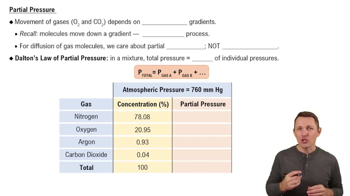
Hydrostatic pressure is the force exerted by fluid within a confined space, such as blood within the blood vessels. In the context of the kidneys, increased arterial blood pressure raises hydrostatic pressure in the glomeruli, which can enhance GFR. However, excessively high pressure may lead to damage to the glomerular capillaries over time.
Recommended video:
Guided course
6:12
Partial Pressure

Renal Autoregulation

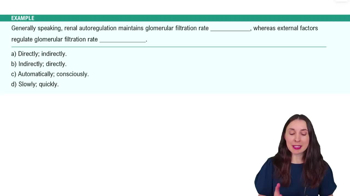
Renal autoregulation refers to the kidneys' ability to maintain a relatively constant GFR despite fluctuations in systemic blood pressure. This mechanism involves adjustments in the diameter of afferent and efferent arterioles to regulate blood flow into and out of the glomeruli. In cases of sustained hypertension, however, this autoregulatory capacity may be overwhelmed, potentially leading to increased GFR and subsequent kidney damage.
Recommended video:
1:11
Renal Physiology: Regulation of Glomerular Filtration Example 1