Ch. 24 The Urinary System
Amerman - Human Anatomy & Physiology 2nd Edition
Amerman2nd EditionHuman Anatomy & PhysiologyISBN: 9780136873822Not the one you use?Change textbook
Chapter 24, Problem L2.4

Why must the kidneys establish a concentration gradient in the interstitial fluid of the renal medulla in order to produce concentrated urine?

Verified step by step guidance
1
Understand the role of the kidneys in maintaining homeostasis: The kidneys regulate water and electrolyte balance in the body by filtering blood and producing urine. Producing concentrated urine is essential to conserve water, especially in conditions of dehydration.
Recognize the importance of the renal medulla: The renal medulla is the innermost part of the kidney, and its interstitial fluid must have a high concentration of solutes (such as sodium and urea) to create a concentration gradient. This gradient is critical for water reabsorption.
Explain the countercurrent multiplier system: The nephron's loop of Henle, particularly the descending and ascending limbs, plays a key role in establishing the concentration gradient. The descending limb is permeable to water but not solutes, while the ascending limb actively transports solutes (like Na⁺ and Cl⁻) out but is impermeable to water. This creates a progressively higher solute concentration in the medulla.
Describe how the gradient facilitates water reabsorption: When filtrate reaches the collecting ducts, the high solute concentration in the medulla's interstitial fluid draws water out of the ducts via osmosis, provided antidiuretic hormone (ADH) is present to make the ducts permeable to water. This process concentrates the urine.
Summarize the necessity of the gradient: Without the concentration gradient in the renal medulla, the kidneys would not be able to reabsorb water efficiently, leading to the production of dilute urine and potential dehydration. The gradient ensures the body can conserve water when needed.

Verified video answer for a similar problem:

This video solution was recommended by our tutors as helpful for the problem above.
Was this helpful?

Key Concepts

Here are the essential concepts you must grasp in order to answer the question correctly.

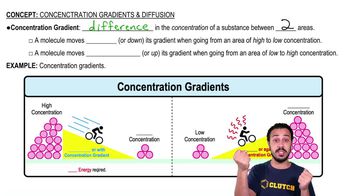
Concentration Gradient

A concentration gradient refers to the difference in the concentration of solutes in a solution between two areas. In the kidneys, a concentration gradient is established in the renal medulla, allowing for the movement of water and solutes. This gradient is crucial for the reabsorption of water, enabling the kidneys to concentrate urine and maintain fluid balance in the body.
Recommended video:
04:51
Concentration Gradients and Diffusion

Countercurrent Multiplication

Countercurrent multiplication is a mechanism in the nephron that enhances the concentration gradient in the renal medulla. It involves the interaction between the descending and ascending limbs of the loop of Henle, where the descending limb is permeable to water but not to solutes, while the ascending limb is permeable to solutes but not to water. This process helps to create a high osmolarity in the medulla, facilitating the reabsorption of water from the collecting ducts.
Recommended video:
Guided course
02:41
Structural Naming of Epithelial Tissue Example 1

Antidiuretic Hormone (ADH)

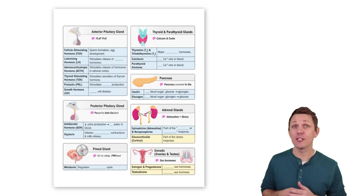
Antidiuretic hormone (ADH), also known as vasopressin, plays a critical role in regulating water balance in the body. When the body is dehydrated, ADH is released, prompting the kidneys to reabsorb more water from the urine back into the bloodstream. This action relies on the established concentration gradient in the renal medulla, allowing for the production of concentrated urine and the conservation of water.
Recommended video:
Guided course
13:06
Review of Major Hormones