
Textbook Question
Sympathetic preganglionic neurons synapse:
a. directly on target cells.
b. on skeletal muscle fibers.
c. on sympathetic chain or collateral ganglia.
d. on vagal ganglia.
691
views

 Verified step by step guidance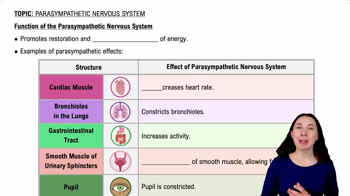
 1:56
1:56
 01:59
01:59 04:26
04:26Sympathetic preganglionic neurons synapse:
a. directly on target cells.
b. on skeletal muscle fibers.
c. on sympathetic chain or collateral ganglia.
d. on vagal ganglia.
A patient, Dr. Young, has both asthma and high blood pressure. Her physician prescribed the drug propranolol to treat her hypertension; this drug blocks all types of β-adrenergic receptors. She also takes the drug albuterol for asthma, which activates β2 receptors on bronchial smooth muscle. Will the pairing of these two drugs cause problems for Dr. Young? Explain.
Mr. Chevalier has been diagnosed with Horner syndrome, which is caused by dysfunction of the sympathetic neurons in the superior cervical ganglion that innervate structures of the head, face, and neck. What symptoms is Mr. Chevalier likely to face due to his disease? Explain.
Common findings in heart failure are fluid retention by the kidneys and stimulation of the heart by the sympathetic nervous system. How would both of these findings help the body to compensate for the failing heart?
The drug neostigmine blocks the activity of the enzyme acetylcholinesterase in the synaptic cleft. Predict the effects of this drug.
Using 20 or fewer words, define each of the following terms in your own words.
b. Parasympathetic nervous system