Ch. 17 The Cardiovascular System I: The Heart
Amerman - Human Anatomy & Physiology 2nd Edition
Amerman2nd EditionHuman Anatomy & PhysiologyISBN: 9780136873822Not the one you use?Change textbook
Chapter 17, Problem 8c

Mark the following statements as true or false. If a statement is false, correct it to make a true statement.
The plateau phase in contractile cells is due to the influx of calcium ions through calcium ion channels.

Verified step by step guidance
1
Step 1: Begin by understanding the context of the problem. The plateau phase occurs during the action potential of contractile cells in the heart, specifically in cardiac muscle cells. This phase is crucial for maintaining the contraction necessary for effective pumping of blood.
Step 2: Recall the mechanism of the plateau phase. During this phase, calcium ions (Ca²⁺) enter the cell through voltage-gated calcium ion channels, which prolongs depolarization and prevents rapid repolarization. This influx of calcium ions is responsible for the plateau phase.
Step 3: Evaluate the statement provided. The statement claims that the plateau phase in contractile cells is due to the influx of calcium ions through calcium ion channels. Based on the mechanism described in Step 2, this statement is true.
Step 4: If the statement were false, you would need to correct it. For example, if the statement incorrectly attributed the plateau phase to another ion (e.g., sodium or potassium), you would correct it by specifying that calcium ions are responsible for the plateau phase.
Step 5: Conclude by confirming the accuracy of the statement or providing the corrected version. In this case, the statement is true, so no correction is necessary.

Verified video answer for a similar problem:

This video solution was recommended by our tutors as helpful for the problem above.
Was this helpful?

Key Concepts

Here are the essential concepts you must grasp in order to answer the question correctly.

Plateau Phase in Cardiac Action Potential

The plateau phase is a crucial part of the cardiac action potential, particularly in contractile cells. It is characterized by a prolonged depolarization that prevents immediate re-excitation of the heart muscle. This phase is primarily maintained by the influx of calcium ions (Ca2+) through voltage-gated calcium channels, which balances the outflow of potassium ions (K+), thus sustaining the contraction of the heart.
Recommended video:
Guided course
3:38
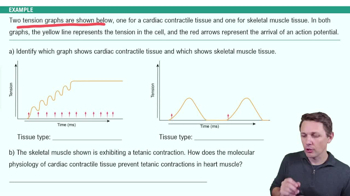
Cardiac Action Potentials Example 3

Calcium Ion Channels

Calcium ion channels are specialized proteins in the cell membrane that allow the selective passage of calcium ions into the cell. In cardiac muscle cells, these channels open during the plateau phase, facilitating the influx of Ca2+ that is essential for muscle contraction. The proper functioning of these channels is vital for maintaining the heart's rhythm and contractility.
Recommended video:
01:55
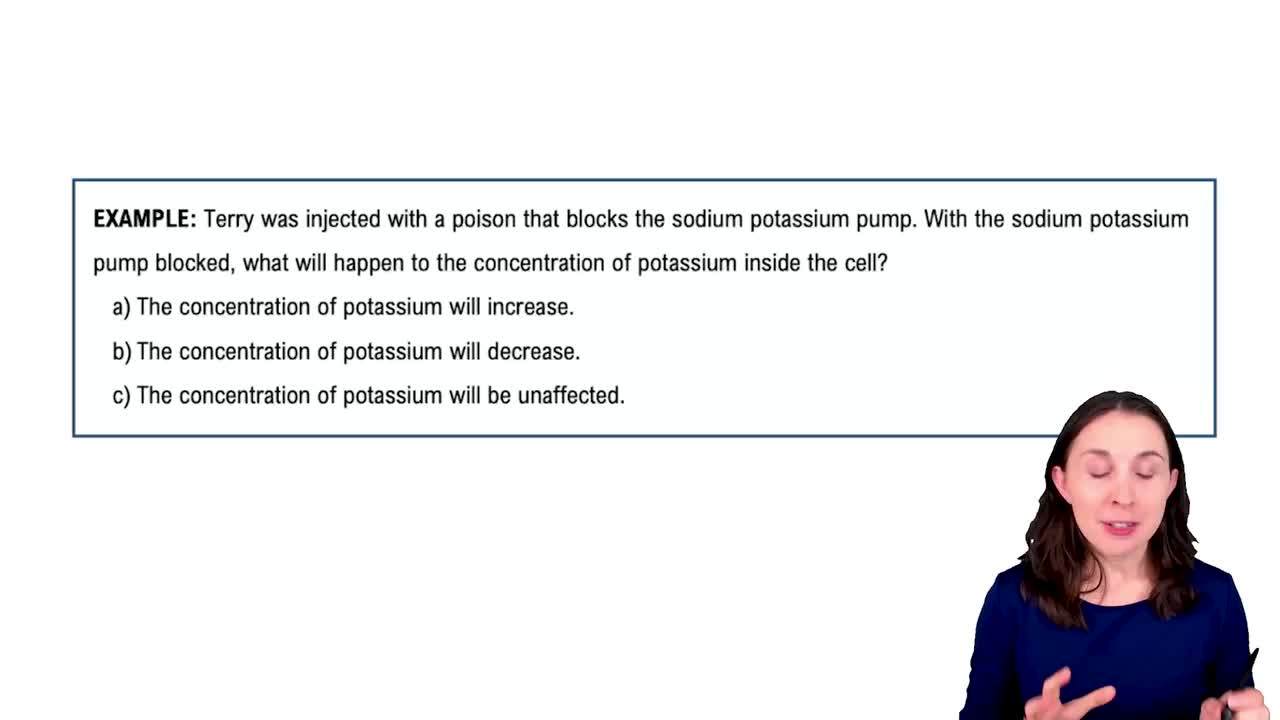
Ions - Sodium and Potassium Example 3

Contractile Cells

Contractile cells, or cardiomyocytes, are the muscle cells of the heart responsible for contraction and pumping blood. They have unique electrical properties that allow them to generate action potentials, leading to coordinated contractions. Understanding their behavior during different phases of the action potential, including the plateau phase, is essential for comprehending cardiac physiology and the overall function of the heart.
Recommended video:
Guided course
6:36
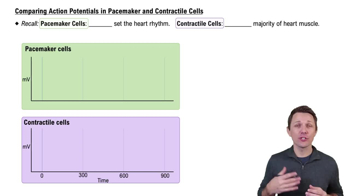
Comparing Action Potentials in Pacemaker and Contractile Cells