Ch. 5 The Integumentary System
Amerman - Human Anatomy & Physiology 2nd Edition
Amerman2nd EditionHuman Anatomy & PhysiologyISBN: 9780136873822Not the one you use?Change textbook
Chapter 5, Problem 7c

Mark the following statements as true or false. If a statement is false, correct it to make a true statement.
Dendritic cells are phagocytes of the immune system that protect the skin and deeper tissues from invasion by pathogens.

Verified step by step guidance
1
Step 1: Understand the role of dendritic cells in the immune system. Dendritic cells are antigen-presenting cells that play a crucial role in initiating the adaptive immune response. They capture antigens and present them to T cells, but they are not primarily phagocytes like macrophages.
Step 2: Analyze the statement provided. The statement claims that dendritic cells are phagocytes of the immune system, which is incorrect. While dendritic cells can perform limited phagocytosis, their primary function is antigen presentation, not phagocytosis.
Step 3: Correct the false statement. The corrected statement should read: 'Dendritic cells are antigen-presenting cells of the immune system that protect the skin and deeper tissues from invasion by pathogens by capturing antigens and activating T cells.'
Step 4: Review the corrected statement to ensure it accurately reflects the function of dendritic cells and their role in the immune system.
Step 5: Confirm that the corrected statement aligns with the broader understanding of immune system functions, particularly the distinction between phagocytes (e.g., macrophages) and antigen-presenting cells (e.g., dendritic cells).

Verified video answer for a similar problem:

This video solution was recommended by our tutors as helpful for the problem above.
Was this helpful?

Key Concepts

Here are the essential concepts you must grasp in order to answer the question correctly.

Dendritic Cells

Dendritic cells are a type of antigen-presenting cell found in tissues that are in contact with the external environment, such as the skin. They play a crucial role in the immune system by capturing and processing antigens, then presenting them to T cells to initiate an immune response. While they have phagocytic capabilities, their primary function is to act as a bridge between the innate and adaptive immune systems.
Recommended video:
02:10
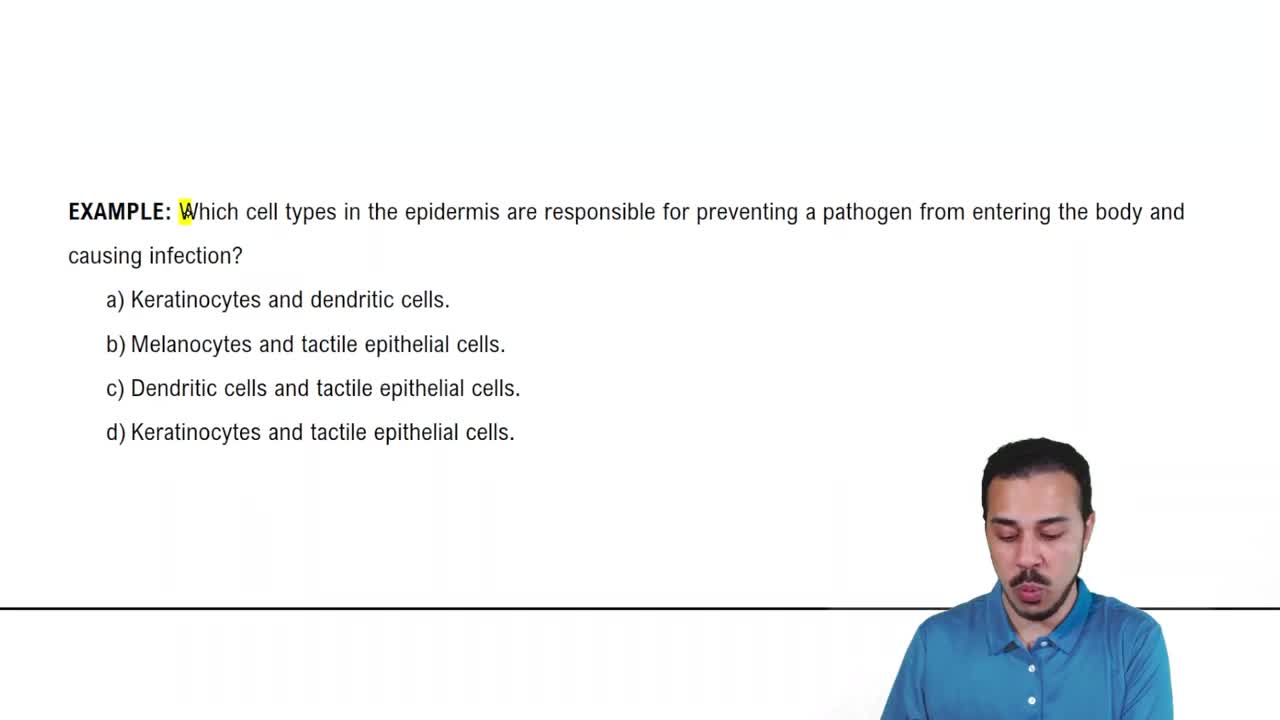
The Epidermis: Cells Example 2

Phagocytosis

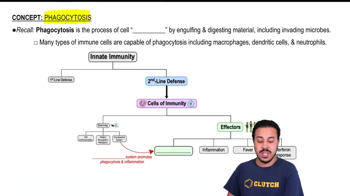
Phagocytosis is the process by which certain cells, known as phagocytes, engulf and digest pathogens and debris. This mechanism is essential for the immune response, as it helps eliminate harmful microorganisms and dead cells. Common phagocytes include macrophages and neutrophils, which are more directly involved in the clearance of pathogens than dendritic cells.
Recommended video:
2:19
Phagocytosis

Immune System

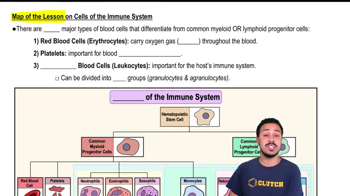
The immune system is a complex network of cells, tissues, and organs that work together to defend the body against harmful invaders, such as bacteria, viruses, and parasites. It consists of two main components: the innate immune system, which provides immediate but non-specific defense, and the adaptive immune system, which develops a targeted response to specific pathogens. Understanding the roles of various immune cells, including dendritic cells, is vital for comprehending how the body protects itself.
Recommended video:
6:08
Map of the Lesson on Cells of the Immune System
Related Practice