Ch. 2 The Chemistry of Life
Amerman - Human Anatomy & Physiology 2nd Edition
Amerman2nd EditionHuman Anatomy & PhysiologyISBN: 9780136873822Not the one you use?Change textbook
Chapter 2, Problem 16a

Mark the following statements as true or false. If a statement is false, correct it to make a true statement.
Carbohydrates are the main source of fuel for the human body.

Verified step by step guidance
1
Step 1: Understand the role of carbohydrates in the human body. Carbohydrates are macronutrients that serve as a primary source of energy for the body. They are broken down into glucose, which is used by cells for energy production through cellular respiration.
Step 2: Evaluate the statement: 'Carbohydrates are the main source of fuel for the human body.' This statement is generally true because carbohydrates are the body's preferred energy source, especially for the brain and muscles during physical activity.
Step 3: Consider any exceptions or additional context. While carbohydrates are the main source of energy, the body can also use fats and proteins as alternative energy sources when carbohydrate intake is insufficient.
Step 4: Determine the truth value of the statement. Based on the information above, the statement is true as written.
Step 5: If the statement were false, you would correct it by specifying that carbohydrates are one of the main sources of energy, but not the only one, as fats and proteins can also contribute to energy production under certain conditions.

Verified video answer for a similar problem:

This video solution was recommended by our tutors as helpful for the problem above.
Was this helpful?

Key Concepts

Here are the essential concepts you must grasp in order to answer the question correctly.

Carbohydrates as Energy Sources

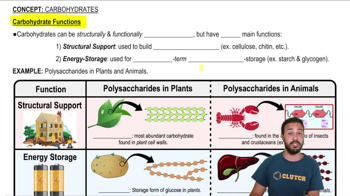
Carbohydrates are one of the three macronutrients and serve as a primary source of energy for the human body. They are broken down into glucose, which is utilized by cells for immediate energy or stored as glycogen for later use. This makes them essential for physical activity and overall metabolic functions.
Recommended video:
05:08
Carbohydrate Functions

Macronutrients

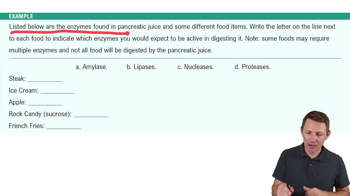
Macronutrients include carbohydrates, proteins, and fats, which are required in large amounts for growth, energy, and bodily functions. Each macronutrient plays a distinct role; for instance, while carbohydrates provide quick energy, proteins are crucial for tissue repair and fats support cell structure and hormone production.
Recommended video:
Guided course
5:16
Pancreas Example 1

Energy Metabolism

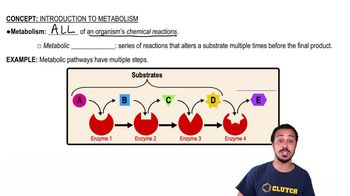
Energy metabolism refers to the biochemical processes that convert food into energy. This involves the breakdown of carbohydrates, fats, and proteins to produce ATP (adenosine triphosphate), the energy currency of the cell. Understanding this process is vital for comprehending how the body utilizes different nutrients for energy.
Recommended video:
02:17
Introduction to Metabolism