
Textbook Question
Mark the following statements as true or false. If a statement is false, correct it to make a true statement.
Excess secretion of thyroid hormones produces weight gain, cold intolerance, and slow heart rate.
863
views

 Verified step by step guidance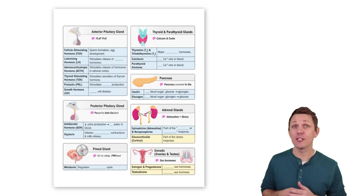
 13:06
13:06 13:06
13:06 02:43
02:43Mark the following statements as true or false. If a statement is false, correct it to make a true statement.
Excess secretion of thyroid hormones produces weight gain, cold intolerance, and slow heart rate.
Mark the following statements as true or false. If a statement is false, correct it to make a true statement.
Thyroid hormones are produced by follicle cells.
Which of the following is not an effect of thyroid hormones?
a. Regulation of the metabolic rate
b. Promotion of growth and development
c. Thermoregulation
d. Synergism with the parasympathetic nervous system
Mark the following statements as true or false. If a statement is false, correct it to make a true statement.
Iodine atoms are a key component of parathyroid hormone.
The thyroid gland consists of:
a. Follicle cells that secrete calcitonin
b. Spherical thyroid follicles that contain iodine-containing colloid
c. Parafollicular cells that produce thyroid hormones
d. Spherical thyroid follicles that surround parathyroid hormone–secreting cells
Mark the following statements as true or false. If a statement is false, correct it to make a true statement.
About 90% of the thyroid hormone produced is triiodothyronine (T3).