
Ch. 17 The Cardiovascular System I: The Heart
Amerman - Human Anatomy & Physiology 2nd Edition
Amerman2nd EditionHuman Anatomy & PhysiologyISBN: 9780136873822Not the one you use?Change textbook
Chapter 17, Problem 1e

Mark the following statements as true or false. If a statement is false, correct it to make a true statement.
The heart plays a role in the regulation of blood pressure and secretes the hormone atrial natriuretic peptide.

Verified step by step guidance
1
Step 1: Understand the role of the heart in regulating blood pressure. The heart contributes to blood pressure regulation by adjusting cardiac output (the amount of blood pumped by the heart per minute) and by secreting hormones that influence vascular resistance and fluid balance.
Step 2: Learn about atrial natriuretic peptide (ANP). ANP is a hormone secreted by the atria of the heart in response to increased blood volume or pressure. It helps reduce blood pressure by promoting sodium and water excretion by the kidneys, dilating blood vessels, and inhibiting the release of other hormones like aldosterone.
Step 3: Evaluate the statement 'The heart plays a role in the regulation of blood pressure and secretes the hormone atrial natriuretic peptide.' Based on the information above, this statement is true because the heart does regulate blood pressure and secretes ANP.
Step 4: If the statement were false, you would need to correct it. For example, if the statement incorrectly claimed that the heart does not regulate blood pressure or does not secrete ANP, you would correct it by stating that the heart does regulate blood pressure and secretes ANP.
Step 5: Confirm the accuracy of the statement by reviewing relevant Anatomy & Physiology concepts, such as the role of the heart in homeostasis and the function of ANP in blood pressure regulation.

Verified video answer for a similar problem:

This video solution was recommended by our tutors as helpful for the problem above.
Was this helpful?

Key Concepts

Here are the essential concepts you must grasp in order to answer the question correctly.

Heart Function

The heart is a muscular organ responsible for pumping blood throughout the body. It plays a crucial role in maintaining blood circulation, which is essential for delivering oxygen and nutrients to tissues and organs. Additionally, the heart's rhythmic contractions help regulate blood pressure by adjusting the volume of blood ejected with each heartbeat.
Recommended video:
Guided course
6:13
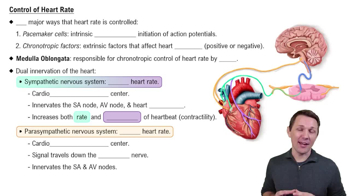
Control of Heart Rate

Atrial Natriuretic Peptide (ANP)

Atrial natriuretic peptide (ANP) is a hormone secreted by the heart's atria in response to increased blood volume and pressure. ANP functions to lower blood pressure by promoting vasodilation and increasing the excretion of sodium and water by the kidneys. This hormone plays a significant role in fluid balance and cardiovascular homeostasis.
Recommended video:
2:45
Antimicrobial Peptides

Blood Pressure Regulation

Blood pressure regulation involves various physiological mechanisms that maintain optimal blood flow and pressure within the circulatory system. Key factors include cardiac output, vascular resistance, and blood volume. The heart, blood vessels, and hormones like ANP work together to ensure that blood pressure remains within a healthy range, adapting to the body's needs during different activities.
Recommended video:
Guided course
6:12
Partial Pressure