
Ch. 17 The Cardiovascular System I: The Heart
Amerman - Human Anatomy & Physiology 2nd Edition
Amerman2nd EditionHuman Anatomy & PhysiologyISBN: 9780136873822Not the one you use?Change textbook
Chapter 17, Problem 1b

Mark the following statements as true or false. If a statement is false, correct it to make a true statement.
The heart consists of two superior ventricles and two inferior atria.

Verified step by step guidance
1
Step 1: Understand the anatomy of the heart. The heart is divided into four chambers: two superior chambers called atria and two inferior chambers called ventricles.
Step 2: Analyze the given statement. The statement claims that the heart consists of two superior ventricles and two inferior atria.
Step 3: Compare the statement with the correct anatomical structure. The correct structure is that the heart has two superior atria and two inferior ventricles, not the reverse.
Step 4: Determine the truth value of the statement. Based on the comparison, the statement is false.
Step 5: Correct the false statement. The corrected statement should read: 'The heart consists of two superior atria and two inferior ventricles.'

Verified video answer for a similar problem:

This video solution was recommended by our tutors as helpful for the problem above.
Was this helpful?

Key Concepts

Here are the essential concepts you must grasp in order to answer the question correctly.

Anatomy of the Heart

The heart is a muscular organ that pumps blood throughout the body and consists of four chambers: two atria (upper chambers) and two ventricles (lower chambers). The atria receive blood, while the ventricles pump it out. Understanding this structure is crucial for identifying any inaccuracies in statements about the heart.
Recommended video:
Guided course
6:13
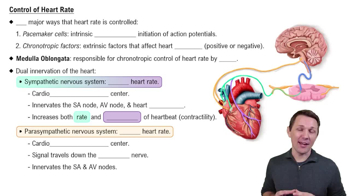
Control of Heart Rate

Function of the Heart Chambers

Each chamber of the heart has a specific function. The right atrium receives deoxygenated blood from the body, the right ventricle pumps it to the lungs, the left atrium receives oxygenated blood from the lungs, and the left ventricle pumps it to the rest of the body. This functional distinction is essential for evaluating statements about the heart's anatomy.
Recommended video:
Guided course
6:13
Control of Heart Rate

Terminology in Cardiology

In cardiology, the terms 'atria' and 'ventricles' refer to specific parts of the heart. Atria are the upper chambers, while ventricles are the lower chambers. Misunderstanding these terms can lead to incorrect statements about the heart's structure, highlighting the importance of precise terminology in medical discussions.
Recommended video:
2:03
Overview of Important Terminology