Ch. 6 Bones and Bone Tissue
Amerman - Human Anatomy & Physiology 2nd Edition
Amerman2nd EditionHuman Anatomy & PhysiologyISBN: 9780136873822Not the one you use?Change textbook
Chapter 6, Problem L2.3

How could a disease that affects primarily cartilage impact bone growth and bone formation?

Verified step by step guidance
1
Understand the relationship between cartilage and bone: Cartilage, particularly hyaline cartilage, plays a critical role in bone growth and formation. In the process of endochondral ossification, cartilage serves as a template that is gradually replaced by bone tissue during development and growth.
Identify the role of growth plates: Growth plates (epiphyseal plates) are regions of hyaline cartilage located at the ends of long bones. These plates are responsible for longitudinal bone growth during childhood and adolescence. Any disease affecting cartilage could disrupt the function of these growth plates.
Consider the impact on endochondral ossification: Diseases that impair cartilage structure or function, such as chondrodysplasia or osteoarthritis, can interfere with the normal process of endochondral ossification. This could lead to abnormalities in bone length, shape, or density.
Evaluate the systemic effects: Cartilage diseases may also affect joint function and mobility, which can indirectly influence bone health by altering mechanical stress and load distribution on bones, potentially leading to bone remodeling or degeneration.
Connect to clinical outcomes: A disease affecting cartilage could result in stunted growth, deformities, or weakened bones, depending on the severity and timing of the disease. Understanding these connections helps in diagnosing and managing such conditions effectively.

Verified video answer for a similar problem:

This video solution was recommended by our tutors as helpful for the problem above.
Was this helpful?

Key Concepts

Here are the essential concepts you must grasp in order to answer the question correctly.

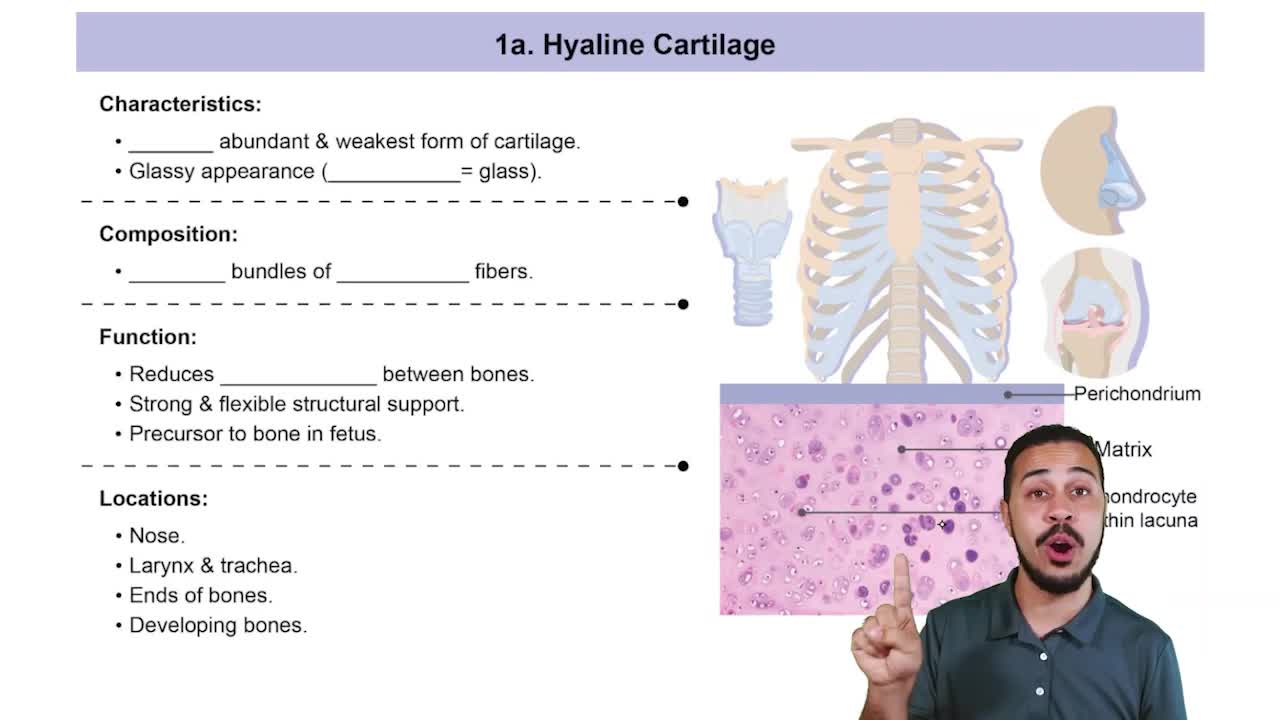
Cartilage Function

Cartilage is a flexible connective tissue that plays a crucial role in joint function and bone growth. It provides a smooth surface for joint movement and acts as a cushion between bones. In the context of growth, cartilage is essential in the growth plates of long bones, where it is replaced by bone tissue during the process of ossification.
Recommended video:
Guided course
05:36
Hyaline Cartilage

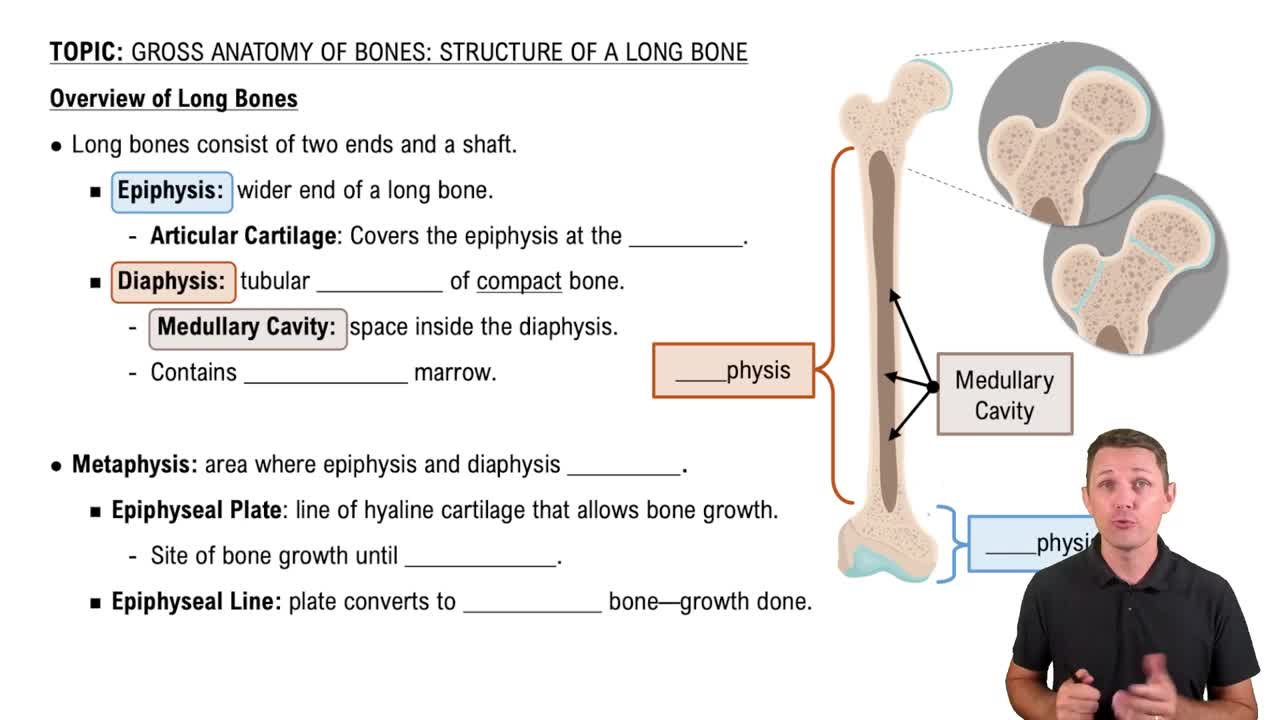
Bone Growth and Ossification

Bone growth occurs primarily through a process called ossification, where cartilage is gradually replaced by bone. This process is vital during childhood and adolescence, as it allows for the elongation of bones. If a disease affects cartilage, it can disrupt this process, leading to stunted growth or deformities in bone structure.
Recommended video:
Guided course
6:19
Overview of Long Bones

Impact of Disease on Cartilage

Diseases that primarily affect cartilage, such as osteoarthritis or chondrodysplasia, can lead to degeneration or abnormal development of cartilage. This can hinder the normal growth and repair of bones, as the lack of healthy cartilage can impair the mechanical and biological signals necessary for bone formation, ultimately affecting overall skeletal health.
Recommended video:
Guided course
05:36
Hyaline Cartilage