
Ch. 3 The Cell
Amerman - Human Anatomy & Physiology 2nd Edition
Amerman2nd EditionHuman Anatomy & PhysiologyISBN: 9780136873822Not the one you use?Change textbook
Chapter 3, Problem 10

Explain how the members of the endomembrane system interact.

Verified step by step guidance
1
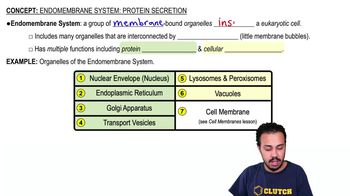
The endomembrane system is a group of interconnected organelles within a eukaryotic cell that work together to modify, package, and transport lipids and proteins. Begin by identifying the key members of the system: the nuclear envelope, endoplasmic reticulum (ER), Golgi apparatus, lysosomes, vesicles, and the plasma membrane.
Start with the nucleus: The nuclear envelope, which is part of the endomembrane system, contains nuclear pores that allow mRNA to exit the nucleus after transcription. This mRNA carries the instructions for protein synthesis to the ribosomes on the rough ER.
In the rough ER, ribosomes translate the mRNA into proteins. These proteins are then folded and modified (e.g., glycosylation) within the ER lumen. Lipids are synthesized in the smooth ER. Both proteins and lipids are packaged into transport vesicles that bud off from the ER.
The transport vesicles carry the proteins and lipids to the Golgi apparatus. In the Golgi, further modifications occur, such as additional glycosylation or sorting of molecules. The Golgi then packages the molecules into new vesicles based on their destination (e.g., lysosomes, plasma membrane, or secretion).
Finally, the vesicles either fuse with the plasma membrane to release their contents outside the cell (exocytosis), deliver enzymes to lysosomes for intracellular digestion, or integrate lipids and proteins into the plasma membrane. This coordinated interaction ensures proper cellular function and communication.

Verified video answer for a similar problem:

This video solution was recommended by our tutors as helpful for the problem above.
Was this helpful?

Key Concepts

Here are the essential concepts you must grasp in order to answer the question correctly.

Endomembrane System

The endomembrane system is a network of membranes within eukaryotic cells that includes the nuclear envelope, endoplasmic reticulum, Golgi apparatus, lysosomes, vesicles, and the plasma membrane. This system is crucial for the synthesis, modification, transport, and degradation of proteins and lipids, facilitating cellular organization and function.
Recommended video:
04:13
Endomembrane System: Protein Secretion

Vesicular Transport

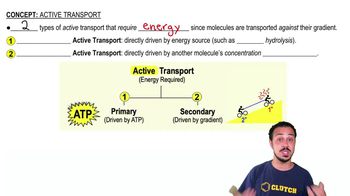
Vesicular transport is the process by which materials are moved within the cell in membrane-bound vesicles. This mechanism allows for the transport of proteins and lipids between different components of the endomembrane system, ensuring that cellular processes such as secretion, digestion, and membrane recycling occur efficiently.
Recommended video:
02:37
Active Transport

Protein Sorting and Modification

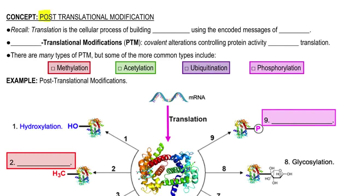
Protein sorting and modification are essential processes that occur primarily in the endoplasmic reticulum and Golgi apparatus. Proteins synthesized in the rough ER undergo folding and post-translational modifications, such as glycosylation, before being sorted into vesicles for transport to their final destinations, which may include secretion outside the cell or delivery to lysosomes.
Recommended video:
04:26
Post-Translational Modification
Related Practice
Textbook Question

Match the term with its appropriate definition. 

Osmosis    

Secondary active transport    

Exocytosis    

Phagocytosis    

Simple diffusion    

Primary active transport    

Pinocytosis    

Facilitated diffusion

a. Type of endocytosis in which a large particle is ingested

b. Transport across the plasma membrane against the concentration gradient via direct use of energy from ATP

c. Passive movement of solute across the plasma membrane

d. Movement of solvent from a solution of lower solute concentration to a solution of higher solute concentration

e. Passive movement of solute across the plasma membrane via a channel or carrier protein

f. Type of endocytosis in which ECF is brought into the cell in a protein-coated pit

g. Release of large substances from the cell through a vesicle

h. Transport of a substance across the plasma membrane against its concentration gradient using the energy from the 'downhill' movement of another substance

649
views
Textbook Question

Match the following terms with the correct functions.

Peroxisome     

Ribosome     

Smooth endoplasmic reticulum     

Mitochondrion     

Golgi apparatus     

Lysosome     

Rough endoplasmic reticulum     

Vesicle

a. Modifies and folds proteins into the correct structure

b. Modifies, packages, and sorts proteins

c. Contains digestive enzymes

d. Granular organelle that makes proteins

e. Synthesizes most of a cell’s ATP

f. Contains enzymes that oxidize toxins and fatty acids

g. Membrane-enclosed structure used to transport substances through the cell

h. Detoxifies certain chemicals, makes lipids, stores calcium ions

48
views
Textbook Question

Mark the following statements about the cytoskeleton as true or false. If a statement is false, correct it to make a true statement.

Microtubules are hollow tubes that align organelles and shuttle them to their proper places in the cell.

589
views
Textbook Question

A hypotonic solution will cause water to move ________the cell, and the cell will ______.

A hypertonic solution will cause water to move ______the cell, and the cell will ________.

758
views
Textbook Question

Mark the following statements about the cytoskeleton as true or false. If a statement is false, correct it to make a true statement.

The cilia found on sperm cells propel the cells through a liquid medium.

596
views
Textbook Question

Mark the following statements about the cytoskeleton as true or false. If a statement is false, correct it to make a true statement.

Actin filaments combine with myosin motor proteins to provide the cell with mechanical strength.

560
views