Ch. 13 The Peripheral Nervous System
Amerman - Human Anatomy & Physiology 2nd Edition
Amerman2nd EditionHuman Anatomy & PhysiologyISBN: 9780136873822Not the one you use?Change textbook
Chapter 13, Problem 18

Which two cranial nerves mediate the gag reflex?

Verified step by step guidance
1
Understand the gag reflex: The gag reflex is a protective mechanism that prevents foreign objects from entering the throat and airway. It involves sensory and motor components mediated by cranial nerves.
Identify the sensory component: The sensory part of the gag reflex detects the presence of a stimulus (e.g., touch or irritation) in the back of the throat or pharynx. This is mediated by the glossopharyngeal nerve (cranial nerve IX).
Identify the motor component: The motor part of the gag reflex triggers the contraction of muscles in the pharynx to expel the stimulus. This is mediated by the vagus nerve (cranial nerve X).
Recognize the interaction: The glossopharyngeal nerve (cranial nerve IX) carries sensory information to the brainstem, which then activates the vagus nerve (cranial nerve X) to produce the motor response.
Summarize the cranial nerves involved: The gag reflex is mediated by cranial nerve IX (glossopharyngeal nerve) for sensory input and cranial nerve X (vagus nerve) for motor output.

Verified video answer for a similar problem:

This video solution was recommended by our tutors as helpful for the problem above.
Was this helpful?

Key Concepts

Here are the essential concepts you must grasp in order to answer the question correctly.

Cranial Nerves

Cranial nerves are a set of twelve paired nerves that emerge directly from the brain, primarily responsible for sensory and motor functions of the head and neck. Each nerve has specific roles, including the transmission of sensory information and the control of muscle movements. Understanding which cranial nerves are involved in reflex actions, such as the gag reflex, is essential for comprehending their physiological functions.
Recommended video:
Guided course
8:20
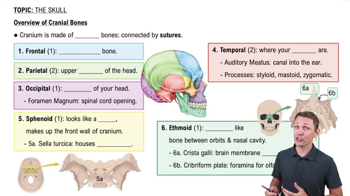
Overview of Cranial Bones

Gag Reflex

The gag reflex, or pharyngeal reflex, is an involuntary contraction of the muscles at the back of the throat triggered by stimulation of the soft palate or the back of the throat. This reflex serves as a protective mechanism to prevent choking and aspiration of foreign objects. Identifying the cranial nerves that mediate this reflex is crucial for understanding its neurological pathways and clinical significance.
Recommended video:
3:37
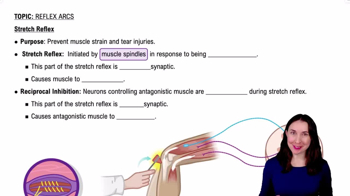
Stretch Reflex

Glossopharyngeal and Vagus Nerves

The glossopharyngeal nerve (Cranial Nerve IX) and the vagus nerve (Cranial Nerve X) are the two cranial nerves primarily responsible for mediating the gag reflex. The glossopharyngeal nerve provides sensory input from the oropharynx, while the vagus nerve controls the motor response of the pharyngeal muscles. Their coordinated action is essential for the proper functioning of the gag reflex, highlighting the interplay between sensory and motor pathways in reflex actions.
Recommended video:
Guided course
2:25
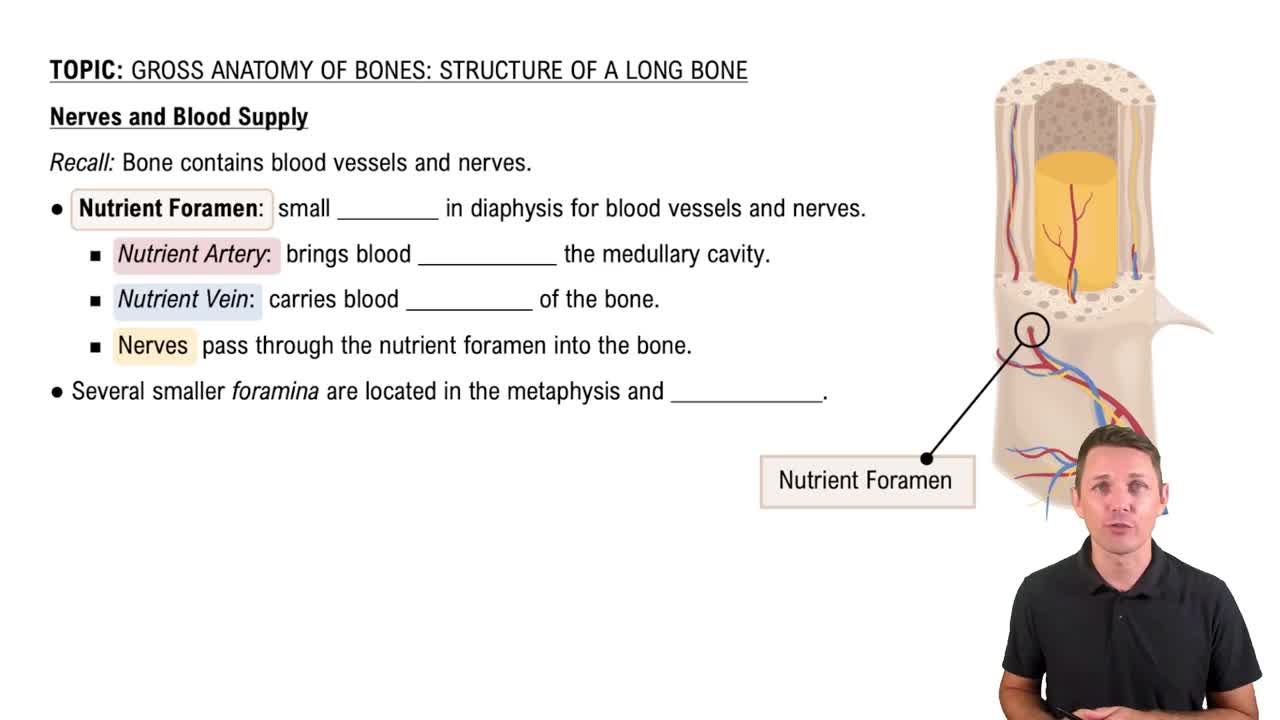
Nerves and Blood Supply