Ch. 5 The Integumentary System
Amerman - Human Anatomy & Physiology 2nd Edition
Amerman2nd EditionHuman Anatomy & PhysiologyISBN: 9780136873822Not the one you use?Change textbook
Chapter 5, Problem 11d

Mark the following statements as true or false. If a statement is false, correct it to make a true statement.
Increased amounts of blood flowing through the dermis lead to pallor in the skin.

Verified step by step guidance
1
Step 1: Begin by understanding the key terms in the statement. 'Dermis' refers to the layer of skin beneath the epidermis that contains blood vessels, nerves, and connective tissue. 'Pallor' refers to a pale appearance of the skin, often caused by reduced blood flow or oxygenation.
Step 2: Analyze the relationship between blood flow in the dermis and skin color. Increased blood flow to the dermis typically leads to redness or a flushed appearance due to the presence of oxygenated blood. Pallor, on the other hand, is associated with decreased blood flow or vasoconstriction.
Step 3: Evaluate the statement: 'Increased amounts of blood flowing through the dermis lead to pallor in the skin.' Based on the physiological relationship between blood flow and skin color, this statement is false.
Step 4: Correct the false statement to make it true. The corrected statement should be: 'Decreased amounts of blood flowing through the dermis lead to pallor in the skin.'
Step 5: Review the corrected statement and ensure it aligns with the physiological principles of blood flow and skin color changes. This step reinforces the concept and ensures understanding.

Verified video answer for a similar problem:

This video solution was recommended by our tutors as helpful for the problem above.
Was this helpful?

Key Concepts

Here are the essential concepts you must grasp in order to answer the question correctly.

Dermal Blood Flow

Dermal blood flow refers to the circulation of blood through the dermis, the layer of skin beneath the epidermis. Increased blood flow to the dermis typically results in a reddening of the skin, known as erythema, due to the dilation of blood vessels. This process is often a response to heat, inflammation, or physical exertion.
Recommended video:
6:40
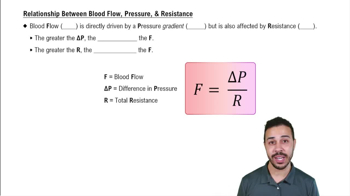
Relationship Between Blood Flow, Pressure, & Resistance

Pallor

Pallor is a condition characterized by an abnormal paleness of the skin, which can occur due to reduced blood flow or decreased blood volume in the dermis. It can be caused by various factors, including shock, anemia, or cold temperatures, leading to vasoconstriction, where blood vessels narrow to conserve heat and maintain blood pressure.

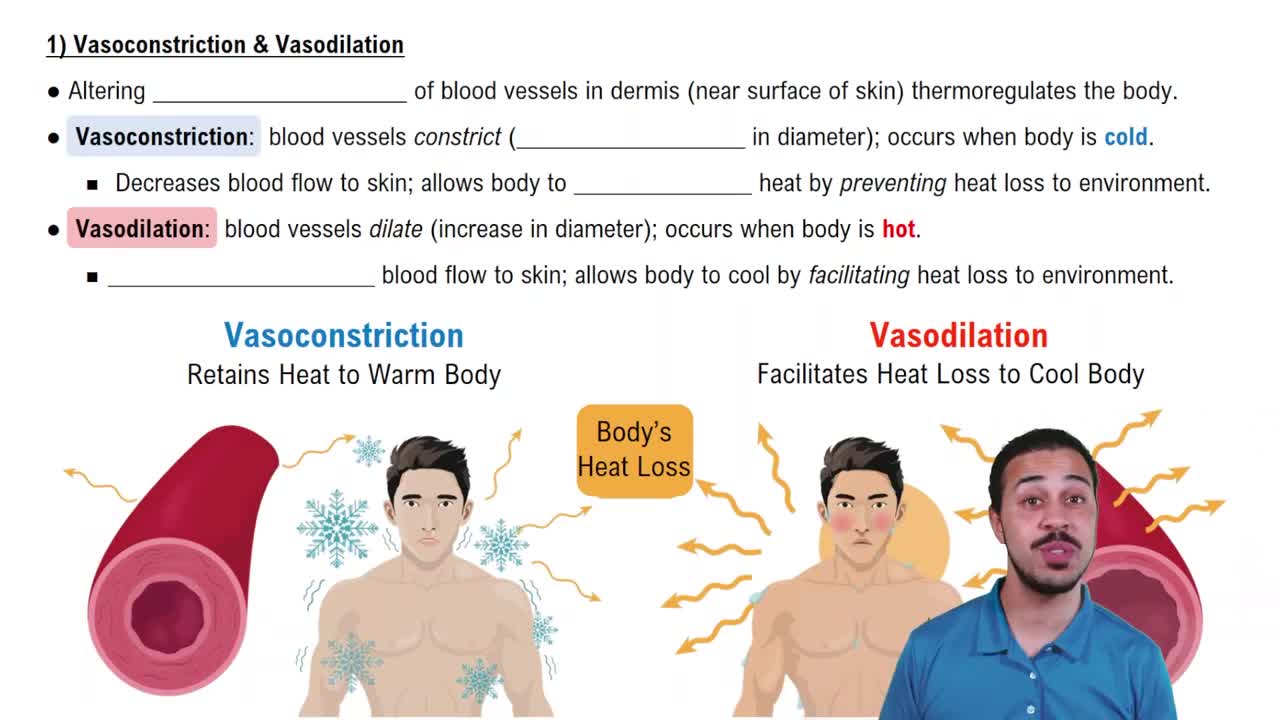
Vasodilation and Vasoconstriction

Vasodilation and vasoconstriction are processes that regulate blood vessel diameter. Vasodilation increases blood flow by widening blood vessels, often resulting in a flushed appearance, while vasoconstriction decreases blood flow by narrowing vessels, leading to pallor. Understanding these mechanisms is crucial for interpreting changes in skin color related to blood flow.
Recommended video:
05:07
Vasoconstriction & Vasodilation