Ch. 21 The Immune System: Innate and Adaptive Body Defenses
Marieb - Human Anatomy & Physiology 7th Edition
Marieb, Hoehn7th EditionHuman Anatomy & PhysiologyISBN: 9780805359091Not the one you use?Change textbook
Chapter 20, Problem 2

The process by which neutrophils squeeze through capillary walls in response to inflammatory signals is called:
a. Diapedesis
b. Chemotaxis
c. Margination
d. Opsonization

Verified step by step guidance
1
Step 1: Understand the key terms related to neutrophil movement during inflammation. Neutrophils are white blood cells that respond to infection or injury by moving from the bloodstream into the affected tissue.
Step 2: Define 'Diapedesis' as the process where neutrophils physically squeeze through the endothelial cells of capillary walls to exit the bloodstream and enter the tissue.
Step 3: Define 'Chemotaxis' as the directed movement of neutrophils toward chemical signals released at the site of inflammation.
Step 4: Define 'Margination' as the process where neutrophils move to the periphery of blood vessels and adhere to the endothelial lining in preparation for exiting the bloodstream.
Step 5: Define 'Opsonization' as the process where pathogens are marked for phagocytosis by neutrophils, enhancing their ability to recognize and engulf microbes.

Verified video answer for a similar problem:

This video solution was recommended by our tutors as helpful for the problem above.
Video duration:
3m
Was this helpful?

Key Concepts

Here are the essential concepts you must grasp in order to answer the question correctly.

Diapedesis

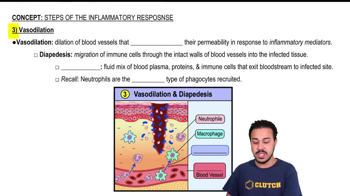
Diapedesis is the process where neutrophils and other white blood cells move through the endothelial cells of capillary walls to reach sites of inflammation. This involves squeezing between endothelial cells without damaging the vessel, allowing immune cells to exit the bloodstream and enter tissues.
Recommended video:
2:39
Step 3: Vasodilation

Chemotaxis

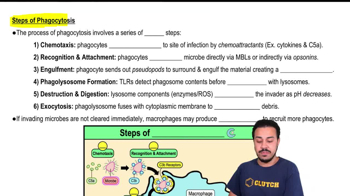
Chemotaxis refers to the directed movement of immune cells, like neutrophils, toward chemical signals released at sites of infection or injury. These chemical attractants guide the cells to the exact location where their defensive actions are needed.
Recommended video:
8:57
Steps of Phagocytosis

Margination

Margination is the initial step in leukocyte migration where white blood cells move toward and adhere to the inner walls of blood vessels near the site of inflammation. This positioning facilitates their subsequent exit from the bloodstream during immune responses.
Recommended video:
Guided course
6:30
Cavities of the Face