Ch. 20 The Lymphatic System and Lymphoid Organs and Tissues
Marieb - Human Anatomy & Physiology 7th Edition
Marieb, Hoehn7th EditionHuman Anatomy & PhysiologyISBN: 9780805359091Not the one you use?Change textbook
Chapter 19, Problem 10

Compare and contrast blood, interstitial fluid, and lymph.

Verified step by step guidance
1
Step 1: Define each fluid clearly. Blood is a connective tissue composed of plasma and cells, circulating within blood vessels. Interstitial fluid is the fluid that surrounds tissue cells, found in the spaces between cells. Lymph is a fluid derived from interstitial fluid that enters lymphatic vessels.
Step 2: Describe the composition of each fluid. Blood contains plasma (water, proteins, nutrients, hormones, waste products) and formed elements (red blood cells, white blood cells, platelets). Interstitial fluid is similar to plasma but lacks most plasma proteins. Lymph is essentially interstitial fluid that has entered lymphatic vessels and may contain lymphocytes and some proteins.
Step 3: Explain the location and movement. Blood circulates within the cardiovascular system, interstitial fluid bathes cells in tissues, and lymph flows through lymphatic vessels back toward the bloodstream.
Step 4: Discuss the functions. Blood transports gases, nutrients, wastes, and immune cells. Interstitial fluid facilitates exchange of substances between blood and cells. Lymph helps return excess interstitial fluid to the blood, filters pathogens, and supports immune responses.
Step 5: Summarize the differences and similarities. All three fluids are involved in transport and maintaining homeostasis, but differ in composition, location, and specific roles within the body’s circulatory and immune systems.

Verified video answer for a similar problem:

This video solution was recommended by our tutors as helpful for the problem above.
Video duration:
2m
Was this helpful?

Key Concepts

Here are the essential concepts you must grasp in order to answer the question correctly.

Blood Composition and Function

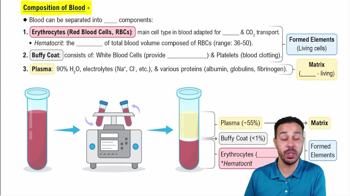
Blood is a connective tissue composed of plasma, red and white blood cells, and platelets. It transports oxygen, nutrients, hormones, and waste products throughout the body, playing a vital role in immune defense and clotting.
Recommended video:
7:49
Composition of Blood

Interstitial Fluid Characteristics

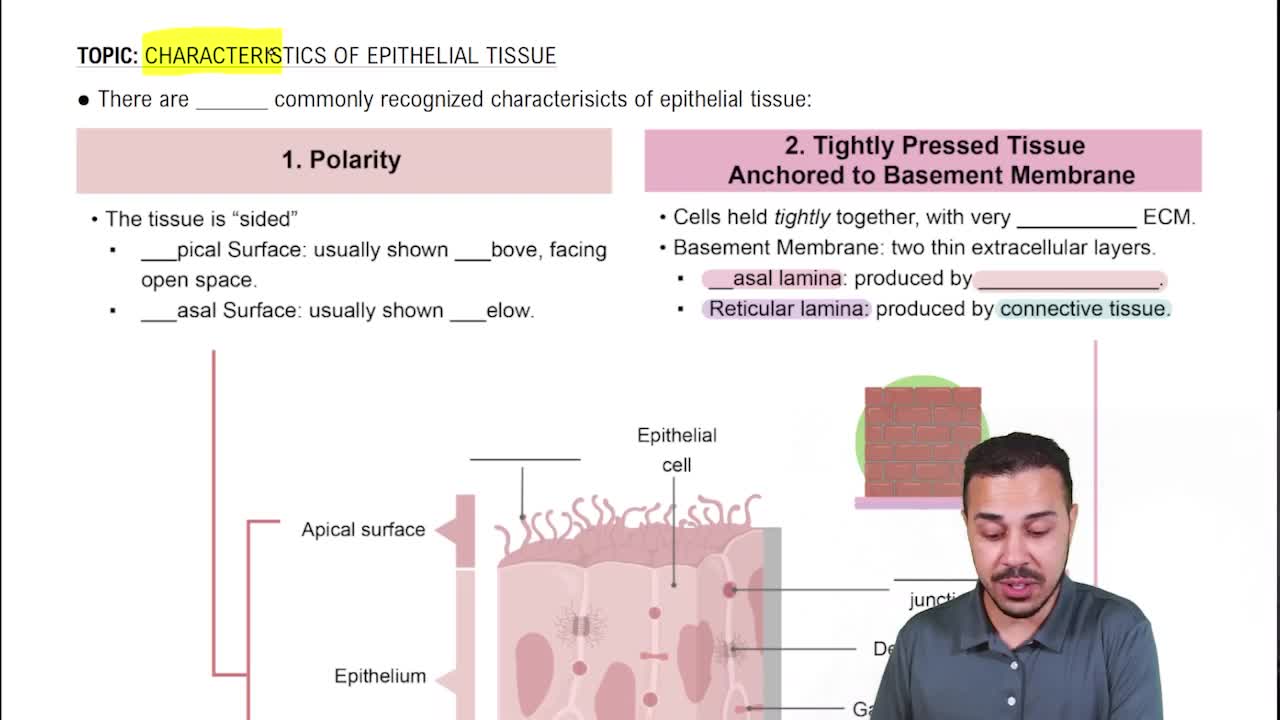
Interstitial fluid is the fluid that surrounds tissue cells, providing a medium for the exchange of nutrients, gases, and waste between blood and cells. It is derived from plasma but lacks large proteins, facilitating cellular communication and nutrient delivery.
Recommended video:
Guided course
00:48
5 Characteristics of Epithelia

Lymph and Its Role in the Lymphatic System

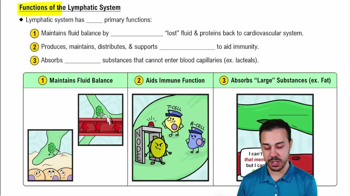
Lymph is a clear fluid formed from interstitial fluid that enters lymphatic vessels. It transports immune cells and removes excess fluid, waste, and pathogens from tissues, contributing to immune surveillance and fluid balance.
Recommended video:
3:57
Functions of the Lymphatic System