Ch. 16 - Innate Immunity: Nonspecific Defenses of the Host
Tortora - Microbiology: An Introduction 14th Edition
Tortora14th EditionMicrobiology: An IntroductionISBN: 9780138200398Not the one you use?Change textbook
Chapter 16, Problem 1

Identify at least one physical factor and one chemical factor that prevent microbes from entering the body through each of the following:
a. Urinary system
b. Genital system

Verified step by step guidance
1
Step 1: Understand that physical factors are structural or mechanical barriers that prevent microbial entry, while chemical factors involve substances that inhibit or kill microbes.
Step 2: For the urinary system, identify a physical factor such as the flow of urine, which mechanically flushes microbes out of the urinary tract, preventing their colonization.
Step 3: For the urinary system, identify a chemical factor such as the acidic pH of urine, which creates an environment that is hostile to many microbes.
Step 4: For the genital system, identify a physical factor such as the mucous membranes lining the genital tract, which act as a barrier to microbial invasion.
Step 5: For the genital system, identify a chemical factor such as the presence of antimicrobial secretions (e.g., acidic vaginal secretions or antimicrobial peptides) that inhibit microbial growth.

Verified video answer for a similar problem:

This video solution was recommended by our tutors as helpful for the problem above.
Video duration:
2m
Was this helpful?

Key Concepts

Here are the essential concepts you must grasp in order to answer the question correctly.

Physical Barriers in the Urinary and Genital Systems

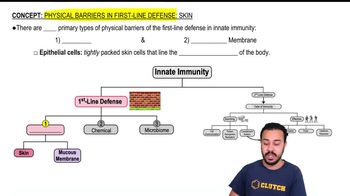
Physical barriers are structural features that prevent microbial entry. In the urinary system, the flow of urine flushes out microbes, while the mucosal lining acts as a protective layer. In the genital system, epithelial cells and mucus secretions form physical barriers that trap and remove pathogens.
Recommended video:
Guided course
01:28
Physical Barriers in First-Line Defenses: Skin

Chemical Barriers in the Urinary and Genital Systems

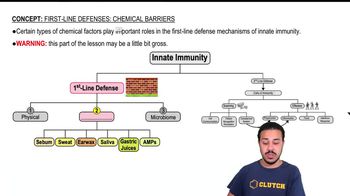
Chemical barriers include substances that inhibit microbial growth or kill microbes. Urine contains antimicrobial compounds like urea and low pH that deter pathogens. In the genital system, secretions such as acidic vaginal fluids and antimicrobial peptides help maintain a hostile environment for microbes.
Recommended video:
Guided course
01:09
Chemical Barriers

Role of pH and Antimicrobial Substances in Host Defense

pH levels and antimicrobial substances are crucial in preventing infections. Acidic pH in urine and vaginal secretions inhibits microbial survival. Additionally, enzymes and peptides disrupt microbial membranes or metabolism, enhancing the body's defense against invading pathogens.
Recommended video:
Guided course
01:59
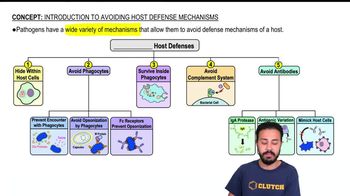
Introduction to Avoiding Host Defense Mechanisms