Ch. 8 - Recombinant DNA Technology
Bauman - Microbiology with Diseases by Taxonomy 6th Edition
Bauman6th EditionMicrobiology with Diseases by TaxonomyISBN: 9780134832302Not the one you use?Change textbook
Chapter 8, Problem 1

Describe three artificial methods of introducing DNA into cells.

Verified step by step guidance
1
Identify that the question asks for three artificial methods used to introduce DNA into cells, which is a key concept in genetic engineering and molecular biology.
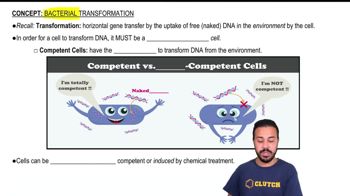
Explain the first method: Transformation, where cells (often bacteria) are made competent to take up naked DNA from their environment, typically by chemical treatment (e.g., calcium chloride) or electroporation.
Describe the second method: Electroporation, which uses an electrical pulse to create temporary pores in the cell membrane, allowing DNA molecules to enter the cell.
Outline the third method: Microinjection, where DNA is directly injected into the nucleus of a cell using a fine glass micropipette under a microscope.
Optionally, mention other methods such as gene gun (biolistics) or viral vectors, but focus on clearly explaining the three main artificial techniques requested.

Verified video answer for a similar problem:

This video solution was recommended by our tutors as helpful for the problem above.
Video duration:
2m
Was this helpful?

Key Concepts

Here are the essential concepts you must grasp in order to answer the question correctly.

Transformation

Transformation is the process of introducing foreign DNA into bacterial cells by making them competent, often through chemical treatment or heat shock. This method allows cells to uptake plasmid DNA from their environment, enabling genetic modification.
Recommended video:
Guided course
03:06
Bacterial Transformation

Electroporation

Electroporation uses short electrical pulses to create temporary pores in the cell membrane, allowing DNA molecules to enter the cell. It is a widely used technique for both prokaryotic and eukaryotic cells due to its efficiency and broad applicability.

Microinjection

Microinjection involves directly injecting DNA into the nucleus or cytoplasm of a cell using a fine glass micropipette. This precise method is commonly used in animal cells and embryos for genetic engineering and transgenic studies.