
Ch. 16 - Innate Immunity: Nonspecific Defenses of the Host
Tortora - Microbiology: An Introduction 14th Edition
Tortora14th EditionMicrobiology: An IntroductionISBN: 9780138200398Not the one you use?Change textbook
Chapter 16, Problem 4

How can the complement system cause endotoxic shock?

Verified step by step guidance
1
Understand that the complement system is a part of the innate immune response, consisting of proteins that, when activated, enhance inflammation, opsonization, and cell lysis.
Recognize that endotoxic shock is caused by the presence of endotoxins, such as lipopolysaccharides (LPS) from the outer membrane of Gram-negative bacteria, in the bloodstream.
Explain that endotoxins can activate the complement system, particularly through the alternative pathway, leading to the generation of potent inflammatory mediators like C3a and C5a, known as anaphylatoxins.
Describe how these anaphylatoxins increase vascular permeability, cause vasodilation, and recruit immune cells, which can lead to widespread inflammation and a drop in blood pressure characteristic of shock.
Summarize that excessive or uncontrolled activation of the complement system by endotoxins results in systemic inflammation, contributing to the pathophysiology of endotoxic shock.

Verified video answer for a similar problem:

This video solution was recommended by our tutors as helpful for the problem above.
Video duration:
1m
Was this helpful?

Key Concepts

Here are the essential concepts you must grasp in order to answer the question correctly.

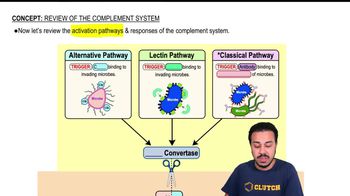
Complement System Activation

The complement system is a group of proteins in the blood that, when activated, enhance immune responses by promoting inflammation, opsonization, and cell lysis. It can be triggered by pathogens or their components, such as endotoxins, leading to a cascade that amplifies immune defense.
Recommended video:
Guided course
05:15
Review of the Complement System

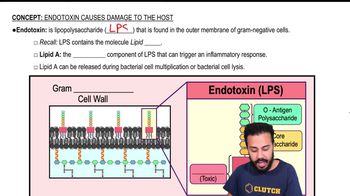
Endotoxins and Their Role

Endotoxins are lipopolysaccharides (LPS) found in the outer membrane of Gram-negative bacteria. When released into the bloodstream, they trigger strong immune responses, including activation of the complement system, which can lead to widespread inflammation and tissue damage.
Recommended video:

Mechanism of Endotoxic Shock

Endotoxic shock occurs when excessive complement activation by endotoxins causes massive release of inflammatory mediators like cytokines and anaphylatoxins. This results in systemic vasodilation, increased vascular permeability, and hypotension, potentially leading to multi-organ failure and death.
Recommended video:
Guided course
01:59
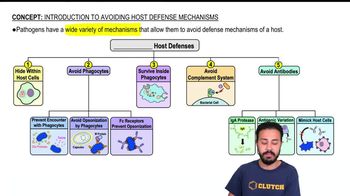
Introduction to Avoiding Host Defense Mechanisms