
Textbook Question
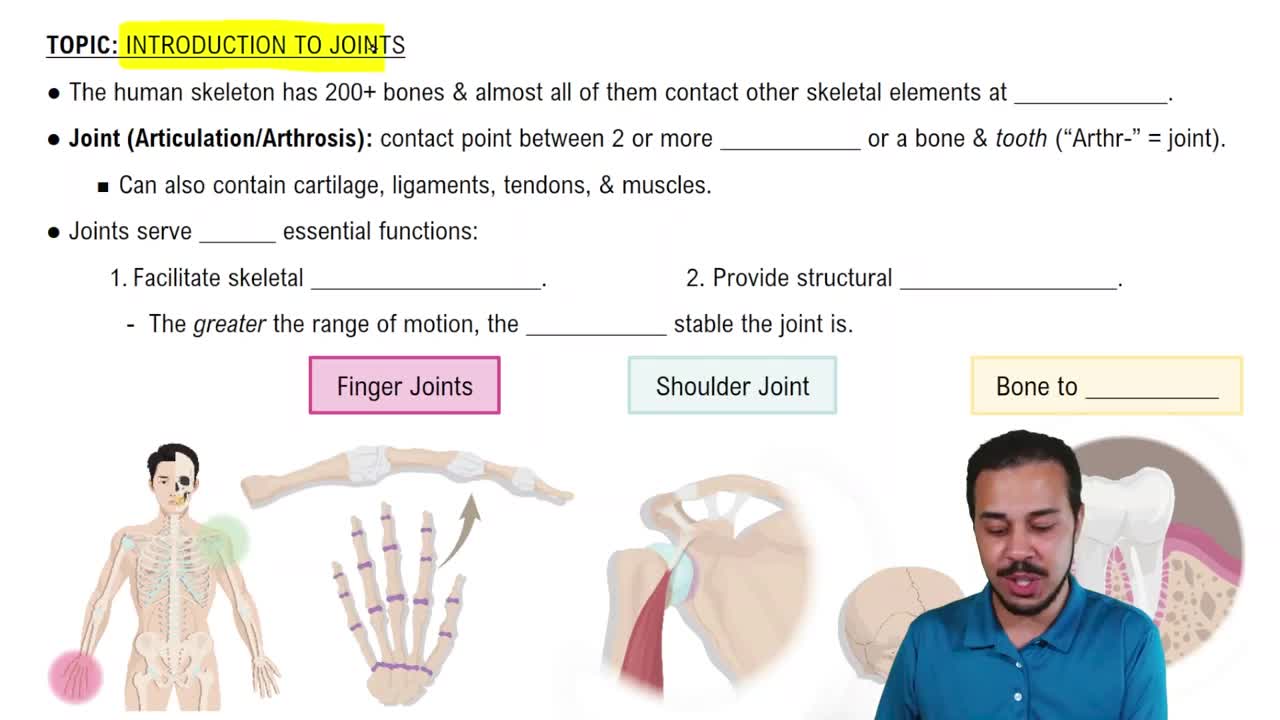
Anatomical characteristics shared by all synovial joints include all except:
a. Articular cartilage
b. A joint cavity
c. An articular capsule
d. Presence of fibrocartilage
1000
views
1
rank

 Verified step by step guidance
 05:39
05:39 05:39
05:39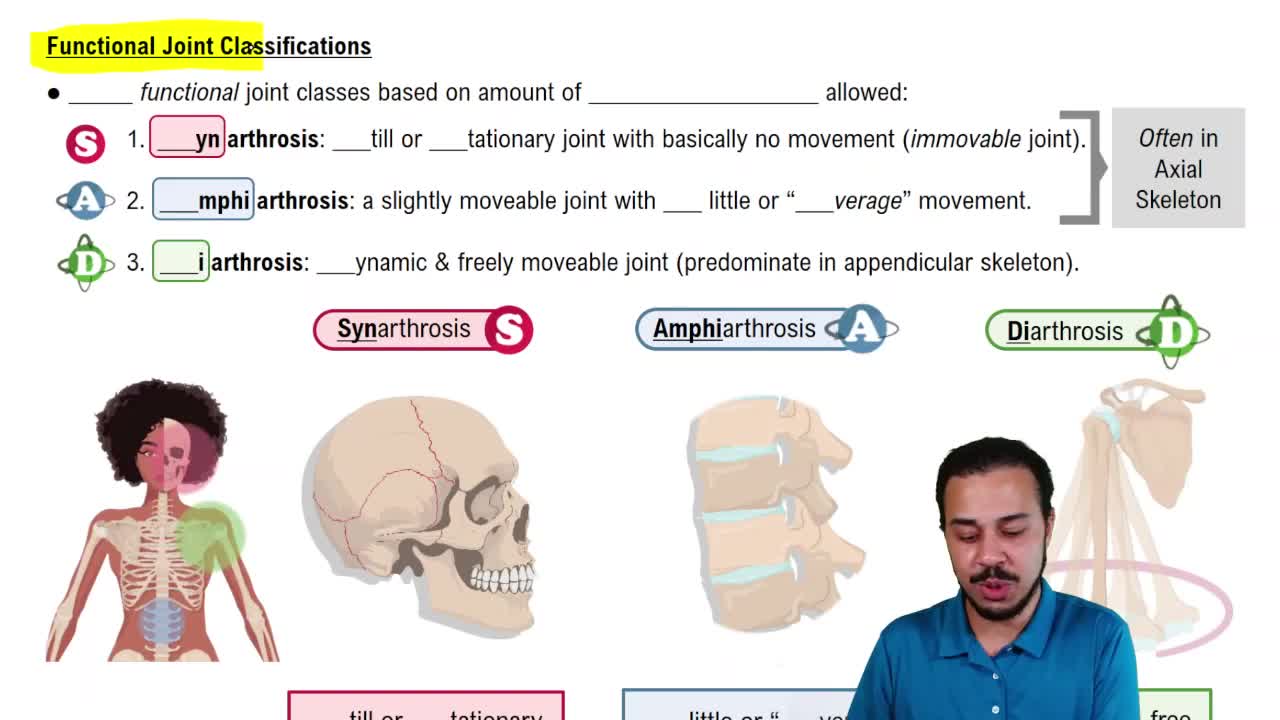 08:43
08:43Anatomical characteristics shared by all synovial joints include all except:
a. Articular cartilage
b. A joint cavity
c. An articular capsule
d. Presence of fibrocartilage
Factors that influence the stability of a synovial joint include
a. Shape of articular surfaces
b. Presence of strong reinforcing ligaments
c. Tone of surrounding muscles
d. All of these
The description 'Articular surfaces deep and secure; capsule heavily reinforced by ligaments and muscle tendons; extremely stable joint' best describes
a. The elbow joint
b. The hip joint
c. The knee joint
d. The shoulder joint
List the functions of the following elements of a synovial joint: a fibrous layer of the capsule, synovial fluid, and articular cartilage.
The knee has been called 'a beauty and a beast.' Provide several reasons that might explain the negative (beast) part of this description.