Ch. 23 The Digestive System
Marieb - Human Anatomy & Physiology 7th Edition
Marieb, Hoehn7th EditionHuman Anatomy & PhysiologyISBN: 9780805359091Not the one you use?Change textbook
Chapter 22, Problem 15

Trace the path of a single protein molecule that has been ingested.
The protein molecule must be digested before it can be transported to and utilized by the cells because
a. Protein is only useful directly
b. Protein has a low pH
c. Proteins in the circulating blood produce an adverse osmotic pressure
d. The protein is too large to be readily absorbed

Verified step by step guidance
1
Understand that proteins are large macromolecules made up of amino acids, and their size prevents them from being absorbed directly into the bloodstream or cells.
Recognize that digestion breaks down proteins into smaller units, primarily amino acids, which can then be absorbed through the intestinal lining.
Trace the path starting from ingestion: the protein enters the mouth, then travels down the esophagus to the stomach where gastric enzymes like pepsin begin protein digestion.
Next, the partially digested protein moves into the small intestine, where pancreatic enzymes such as trypsin and chymotrypsin further break down the protein into amino acids.
Finally, these amino acids are absorbed through the intestinal epithelium into the bloodstream, allowing them to be transported to cells for utilization.

Verified video answer for a similar problem:

This video solution was recommended by our tutors as helpful for the problem above.
Video duration:
3m
Was this helpful?

Key Concepts

Here are the essential concepts you must grasp in order to answer the question correctly.

Protein Digestion

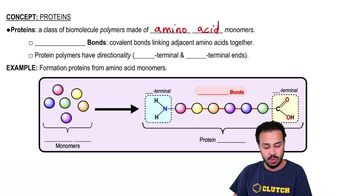
Protein digestion involves breaking down large protein molecules into smaller peptides and amino acids through enzymatic action, primarily in the stomach and small intestine. This process is essential because only small molecules can be absorbed by the intestinal lining and transported into the bloodstream for cellular use.
Recommended video:
02:50
Proteins

Absorption of Nutrients

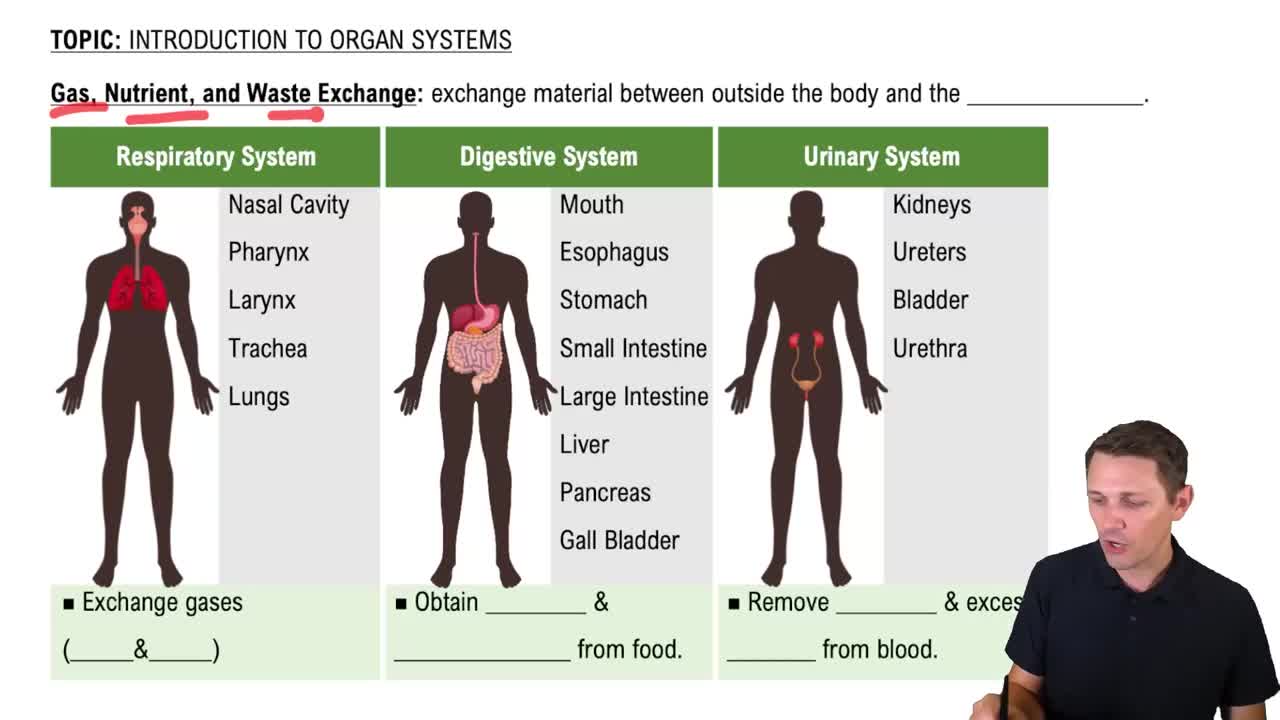
Absorption is the process by which digested nutrients pass through the intestinal wall into the bloodstream. Large molecules like intact proteins cannot be absorbed directly; they must be broken down into smaller units such as amino acids to cross the intestinal epithelium efficiently.
Recommended video:
Guided course
03:59
Gas, Nutrient and Waste Exchange

Protein Utilization by Cells

Cells utilize amino acids, the building blocks of proteins, to synthesize new proteins necessary for structure, function, and regulation. Since whole proteins are too large to enter cells directly, digestion and absorption of amino acids are critical steps before cellular uptake and use.
Recommended video:
02:50
Proteins
Related Practice
Textbook Question

Trace the path of a single protein molecule that has been ingested.

The protein molecule will be digested by enzymes made by

a. The mouth, stomach, and colon

b. The stomach, liver, and small intestine

c. The small intestine, mouth, and liver

d. The pancreas, stomach, and small intestine

816
views
Textbook Question

Lara was on a diet but she could not eat less and kept claiming her stomach had a mind of its own. She was joking, but indeed, there is a 'gut brain' called the enteric nervous system. Is it part of the parasympathetic and sympathetic nervous system? Explain.

772
views
Textbook Question

Trace the path of a single protein molecule that has been ingested.

Before the blood carrying the products of protein digestion reaches the heart, it first passes through capillary networks in:

a. The spleen

b. The lungs

c. The liver

d. The brain

100
views
Textbook Question

Make a simple line drawing of the organs of the alimentary canal and label each organ. Then add three labels to your drawing—salivary glands, liver, and pancreas—and use arrows to show where each of these organs empties its secretions into the alimentary canal.

1051
views
1
rank
Textbook Question

Someone has eaten a meal of buttered toast, cream, and eggs. Which of the following would you expect to happen?

a. Compared to the period shortly after the meal, gastric motility and secretion of HCl decrease when the food reaches the duodenum

b. Gastric motility increases even as the person is chewing the food (before swallowing)

c. Fat will be emulsified in the duodenum by the action of bile

d. All of these

765
views
Textbook Question

a. What is the normal number of permanent teeth? Of deciduous teeth?

b. What substance covers the tooth crown? Its root?

c. What substance makes up the bulk of a tooth?

d. What and where is pulp?

110
views