Ch. 14 - Infection, Infectious Diseases, and Epidemiology
Bauman - Microbiology with Diseases by Taxonomy 6th Edition
Bauman6th EditionMicrobiology with Diseases by TaxonomyISBN: 9780134832302Not the one you use?Change textbook
Chapter 14, Problem 5

The process by which microorganisms attach themselves to cells is :
a. Infection
b. Contamination
c. Disease
d. Adhesion

Verified step by step guidance
1
Understand the definitions of each term given in the options to identify which best describes the process of microorganisms attaching to cells.
Infection refers to the invasion and multiplication of microorganisms within the host, which occurs after attachment but is not the attachment itself.
Contamination means the presence of microorganisms on a surface or object, not necessarily involving attachment to cells.
Disease is the result of infection causing damage or dysfunction in the host, which happens after microorganisms have attached and multiplied.
Adhesion is the specific process where microorganisms attach themselves to host cells, often the first step in colonization and infection.

Verified video answer for a similar problem:

This video solution was recommended by our tutors as helpful for the problem above.
Video duration:
1m
Was this helpful?

Key Concepts

Here are the essential concepts you must grasp in order to answer the question correctly.

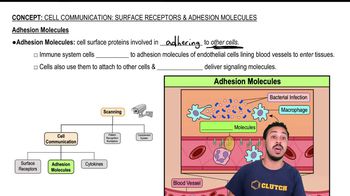
Microbial Adhesion

Adhesion is the process by which microorganisms attach themselves to host cells or surfaces. This initial step is crucial for colonization and infection, as it allows microbes to resist removal and establish themselves in a specific environment.
Recommended video:
Guided course
02:58
Adhesion Molecules

Infection

Infection occurs when microorganisms invade and multiply within host tissues, potentially causing harm. It follows adhesion and involves overcoming host defenses, leading to disease symptoms if the immune response is insufficient.
Recommended video:
Guided course
03:52
Map of Lesson on Bacteriophage Infections

Contamination vs. Disease

Contamination refers to the presence of microbes on surfaces or objects without necessarily causing harm, while disease is the result of infection that impairs normal body functions. Understanding these distinctions helps clarify the stages from microbial presence to illness.
Recommended video:
Guided course
04:57
Communicable vs. Noncommunicable Diseases