Ch. 6 - Microbial Nutrition and Growth
Bauman - Microbiology with Diseases by Taxonomy 6th Edition
Bauman6th EditionMicrobiology with Diseases by TaxonomyISBN: 9780134832302Not the one you use?Change textbook
Chapter 6, Problem 1

High temperature affects the shape of particular molecules. How does this affect the life of a microbe?

Verified step by step guidance
1
Understand that high temperature can cause denaturation of proteins and other macromolecules in microbes. Denaturation means the loss of the molecule's natural three-dimensional structure.
Recognize that the shape of proteins is critical for their function, including enzymes that catalyze essential biochemical reactions in the microbe.
Explain that when proteins denature due to heat, their active sites are altered or destroyed, leading to loss of enzymatic activity and disruption of metabolic processes.
Consider that damage to structural molecules like membranes and nucleic acids can also occur, further impairing cell integrity and function.
Conclude that these molecular changes caused by high temperature can inhibit growth, reproduction, and ultimately lead to the death of the microbe.

Verified video answer for a similar problem:

This video solution was recommended by our tutors as helpful for the problem above.
Video duration:
2m
Was this helpful?

Key Concepts

Here are the essential concepts you must grasp in order to answer the question correctly.

Protein Denaturation

High temperatures can cause proteins to lose their three-dimensional structure, a process called denaturation. This structural change disrupts protein function, which is critical for enzymes and cellular processes in microbes, potentially leading to cell death.
Recommended video:
Guided course
04:00
Denatured Proteins & Chaperones

Enzyme Activity and Stability

Enzymes are proteins that catalyze biochemical reactions essential for microbial metabolism. Elevated temperatures can reduce enzyme stability and activity by altering their shape, impairing metabolic pathways and affecting microbial growth and survival.
Recommended video:
Guided course
04:18
Enzyme Activation Energy

Membrane Fluidity and Integrity

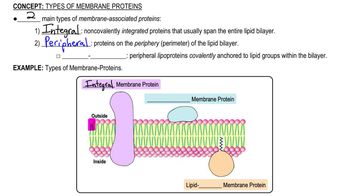
High temperatures can increase membrane fluidity, disrupting the integrity and function of microbial cell membranes. This affects nutrient transport, energy production, and overall cell viability, influencing the microbe's ability to maintain homeostasis.
Recommended video:
Guided course
03:23
Types of Membrane Proteins