
Ch. 54 - Biodiversity and Conservation Ecology
Freeman - Biological Science 8th Edition
Freeman8th EditionBiological ScienceISBN: 9780138276263Not the one you use?Change textbook
Chapter 54, Problem 7

Some biologists prefer to focus efforts on preserving endangered species while others prefer to focus on preserving ecosystems. What is your advice to biologists, based on the evidence?

Verified step by step guidance
1
Understand the importance of biodiversity: Biodiversity includes the variety of all life forms on Earth, from genes and species to ecosystems. It is crucial for ecosystem stability, resilience, and providing ecosystem services.
Evaluate the benefits of species preservation: Preserving endangered species can prevent extinction, maintain genetic diversity, and protect species that may have ecological, cultural, or economic importance.
Consider the advantages of ecosystem preservation: Ecosystem preservation focuses on maintaining entire habitats, which can protect multiple species, including those not yet identified as endangered, and ensure the functioning of ecological processes.
Analyze the interconnectedness of species and ecosystems: Recognize that species and ecosystems are interconnected. Protecting an ecosystem can inherently protect the species within it, while some species play key roles in maintaining ecosystem health.
Advise a balanced approach: Suggest that biologists consider a balanced approach that integrates both species and ecosystem preservation, as both strategies are essential for maintaining biodiversity and ecological integrity.

Verified video answer for a similar problem:

This video solution was recommended by our tutors as helpful for the problem above.
Video duration:
26s
Was this helpful?

Key Concepts

Here are the essential concepts you must grasp in order to answer the question correctly.

Endangered Species Conservation

Endangered species conservation focuses on protecting individual species that are at risk of extinction. This approach often involves targeted actions such as breeding programs, habitat restoration, and legal protections. The goal is to increase population numbers and genetic diversity to ensure the species' survival. However, it can be resource-intensive and may not address broader ecological issues.
Recommended video:
Guided course
04:32
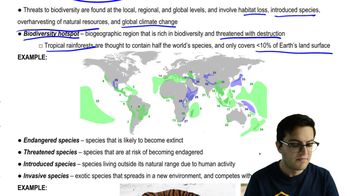
Biodiversity Hotspots and Endangered Species

Ecosystem Conservation

Ecosystem conservation aims to preserve entire ecosystems, maintaining the complex interactions between species and their environments. This holistic approach can protect multiple species simultaneously and ensure the sustainability of ecosystem services like water purification and pollination. By maintaining ecosystem integrity, this strategy can be more cost-effective and resilient to environmental changes.
Recommended video:
Guided course
03:56
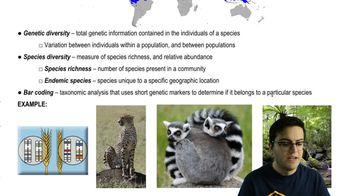
Conservation Biology and Biodiversity

Biodiversity and Ecological Balance

Biodiversity refers to the variety of life forms within a given ecosystem, biome, or the entire planet. High biodiversity contributes to ecosystem resilience, allowing it to withstand and recover from disturbances. Ecological balance is achieved when species and their environments are in a stable state, supporting each other's survival. Both concepts are crucial for understanding the long-term benefits of conservation strategies.
Recommended video:
Related Practice
Textbook Question

Why is the common phrase "humans and animals" not accurate in biology? Suggest one way that a more scientific outlook could boost conservation efforts.

690
views
Textbook Question

Biologists claim that the all-taxa survey now under way at the Great Smoky Mountains National Park in the United States will improve their ability to estimate the total number of species living today. Discuss the benefits and limitations that this data set will provide in understanding the extent of global biodiversity.

712
views
Textbook Question

Explain why the construction of wildlife corridors can help maintain genetic diversity in a fragmented landscape.

840
views
Textbook Question

The population size of mountain pine beetles in the American Northwest has long been held in check by freezing temperatures during the winters. As winters warm, populations of pine beetles are increasing, killing whitebark pine forest. Grizzly bears rely on the nuts of whitebark pine trees. Do you think climate change is affecting the fitness of the grizzly bear population?


a. No, because climate change is affecting the beetles, not the bears.

b. Yes, because climate change is decreasing the food supply of the bears, which means they will be less strong.

c. Yes, because climate change is decreasing the food supply of the bears, which is likely to reduce their ability to survive or reproduce.

442
views
Textbook Question

The maps shown here chronicle the loss of old-growth forest (more than 200 years old) that occurred in the United States. In your opinion, under what conditions is it ethical for conservationists who live in the United States to lobby government officials in Brazil, Indonesia, and other tropical countries to slow the rate of loss of old-growth forest?

784
views