Ch. 9 - Biotechnology & DNA Technology
Tortora - Microbiology: An Introduction 14th Edition
Tortora14th EditionMicrobiology: An IntroductionISBN: 9780138200398Not the one you use?Change textbook
Chapter 9, Problem 1

Restriction enzymes were first discovered with the observation that
a. DNA is restricted to the nucleus.
b. Bacteriophage DNA is destroyed in a host cell.
c. Foreign DNA is kept out of a cell.
d. Foreign DNA is restricted to the cytoplasm.
e. All of the above.

Verified step by step guidance
1
Understand the historical context: Restriction enzymes were discovered through studies involving bacteriophages (viruses that infect bacteria) and their interaction with bacterial host cells.
Recall that the key observation was that bacteriophage DNA was selectively destroyed when introduced into certain bacterial cells, which led to the concept of restriction-modification systems.
Recognize that this destruction of foreign DNA (such as bacteriophage DNA) is a defense mechanism by bacteria to protect themselves from viral infection.
Evaluate each option in the question: option (b) states that bacteriophage DNA is destroyed in a host cell, which aligns with the original discovery of restriction enzymes.
Conclude that the correct understanding is that restriction enzymes were first discovered because bacteriophage DNA was destroyed in the host bacterial cell, corresponding to option (b).

Verified video answer for a similar problem:

This video solution was recommended by our tutors as helpful for the problem above.
Video duration:
2m
Was this helpful?

Key Concepts

Here are the essential concepts you must grasp in order to answer the question correctly.

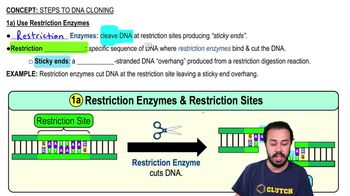
Restriction Enzymes

Restriction enzymes are proteins produced by bacteria that cut DNA at specific sequences. They serve as a defense mechanism by recognizing and cleaving foreign DNA, such as that from invading bacteriophages, thereby protecting the bacterial genome.
Recommended video:
Guided course
03:27
1a) Use Restriction Enzymes

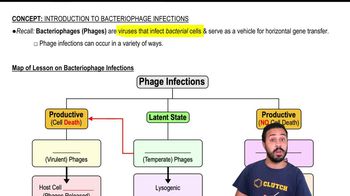
Bacteriophage Infection and Host Defense

Bacteriophages are viruses that infect bacteria by injecting their DNA. Bacteria defend themselves by destroying this foreign DNA using restriction enzymes, preventing the phage from hijacking the bacterial machinery for replication.
Recommended video:
Guided course
03:52
Map of Lesson on Bacteriophage Infections

Foreign DNA Recognition and Degradation

Cells can distinguish between their own DNA and foreign DNA based on specific markers like methylation patterns. Restriction enzymes target unmethylated foreign DNA for cleavage, thereby restricting the presence and replication of foreign genetic material within the host.
Recommended video:
Guided course
04:24
Pattern Recognition Receptors