Ch. 27 - Environmental Microbiology
Tortora - Microbiology: An Introduction 14th Edition
Tortora14th EditionMicrobiology: An IntroductionISBN: 9780138200398Not the one you use?Change textbook
Chapter 27, Problem 1

For the following question, answer whether
a. The process takes place under aerobic conditions.
b. The process takes place under anaerobic conditions.
c. The amount of oxygen doesn’t make any difference.


Activated sludge system

Verified step by step guidance
1
Step 1: Understand what an activated sludge system is. It is a wastewater treatment process that uses a mixture of microorganisms to break down organic matter in the presence of oxygen.
Step 2: Recall that the activated sludge process relies on aerobic bacteria, which require oxygen to metabolize organic pollutants effectively.
Step 3: Recognize that because aerobic bacteria are involved, oxygen must be supplied continuously to maintain their activity and ensure efficient treatment.
Step 4: Conclude that the process takes place under aerobic conditions, meaning oxygen is essential for the system to function properly.
Step 5: Therefore, the correct answer is that the activated sludge system operates under aerobic conditions.

Verified video answer for a similar problem:

This video solution was recommended by our tutors as helpful for the problem above.
Video duration:
1m
Was this helpful?

Key Concepts

Here are the essential concepts you must grasp in order to answer the question correctly.

Activated Sludge System

An activated sludge system is a biological wastewater treatment process that uses aeration and a microbial biomass to degrade organic pollutants. It relies on microorganisms consuming organic matter in the presence of oxygen, forming flocs that can be separated from treated water.
Recommended video:
Guided course
02:37
Active Transport

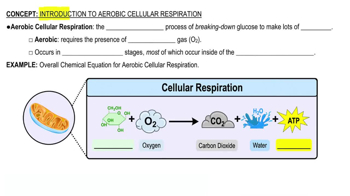
Aerobic Conditions

Aerobic conditions refer to environments where oxygen is present and available for microbial metabolism. In such conditions, aerobic microorganisms use oxygen as the terminal electron acceptor to break down organic compounds efficiently.
Recommended video:
Guided course
05:11
Introduction to Aerobic Cellular Respiration

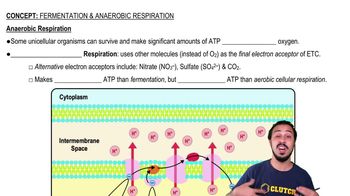
Anaerobic Conditions

Anaerobic conditions occur when oxygen is absent, and microorganisms use alternative electron acceptors like nitrate or sulfate. Anaerobic processes typically produce different byproducts such as methane or hydrogen sulfide and are slower than aerobic degradation.
Recommended video:
Guided course
03:35
Anaerobic Respiration