Ch. 9 - Biotechnology & DNA Technology
Tortora - Microbiology: An Introduction 14th Edition
Tortora14th EditionMicrobiology: An IntroductionISBN: 9780138200398Not the one you use?Change textbook
Chapter 9, Problem 2

Differentiate the following terms. Which one is “hit and miss”—that is, does not add a specific gene to a cell?
a. Protoplast fusion
b. Gene gun
c. Microinjection
d. Electroporation

Verified step by step guidance
1
Step 1: Understand the meaning of "hit and miss" in the context of gene transfer. It refers to a method that does not guarantee the addition of a specific gene to a cell, meaning the gene transfer is random or non-specific.
Step 2: Define protoplast fusion: This technique involves the fusion of two protoplasts (cells without cell walls) to combine their genetic material, often used to introduce specific genes from one cell to another.
Step 3: Define gene gun: This method uses high-velocity microprojectiles coated with DNA to physically deliver specific genes directly into target cells, allowing targeted gene transfer.
Step 4: Define microinjection: This technique involves directly injecting a specific gene or DNA into the nucleus or cytoplasm of a cell using a fine needle, ensuring targeted gene addition.
Step 5: Define electroporation: This method uses electrical pulses to create temporary pores in the cell membrane, allowing DNA to enter the cell. However, the uptake of DNA is random and not targeted to a specific gene, making it a "hit and miss" method.

Verified video answer for a similar problem:

This video solution was recommended by our tutors as helpful for the problem above.
Video duration:
2m
Was this helpful?

Key Concepts

Here are the essential concepts you must grasp in order to answer the question correctly.

Methods of Gene Transfer in Microbiology

Gene transfer techniques introduce genetic material into cells to modify their traits. Common methods include protoplast fusion, gene gun, microinjection, and electroporation, each differing in mechanism and precision. Understanding these methods helps distinguish targeted from non-specific gene delivery.
Recommended video:
Guided course
04:42
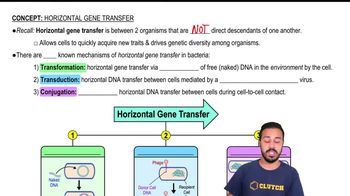
Horizontal Gene Transfer

Specificity of Gene Delivery

Specific gene delivery means inserting a particular gene into a cell's genome, ensuring controlled genetic modification. Some methods, like microinjection and gene gun, target specific genes, while others may introduce DNA more randomly, affecting the precision and outcome of genetic engineering.
Recommended video:
Guided course
04:42
Horizontal Gene Transfer

Protoplast Fusion as a Non-Specific Method

Protoplast fusion merges entire cells without targeting specific genes, combining whole genomes from different cells. This 'hit and miss' approach results in random genetic recombination rather than precise gene insertion, contrasting with more targeted methods like microinjection or electroporation.
Recommended video:
Guided course
02:06
Cyclic vs. Non-Cyclic Photophosphorylation