Ch. 15 - Microbial Mechanisms of Pathogenicity
Tortora - Microbiology: An Introduction 14th Edition
Tortora14th EditionMicrobiology: An IntroductionISBN: 9780138200398Not the one you use?Change textbook
Chapter 15, Problem 2

How are capsules and cell wall components related to pathogenicity? Give specific examples.

Verified step by step guidance
1
Understand that pathogenicity refers to the ability of a microorganism to cause disease in a host. Capsules and cell wall components are key factors that contribute to this ability by helping bacteria evade the host's immune system or cause damage.
Explain that capsules are polysaccharide layers surrounding some bacterial cells, which protect bacteria from phagocytosis by host immune cells. For example, Streptococcus pneumoniae has a capsule that prevents engulfment by macrophages, enhancing its virulence.
Discuss how cell wall components, such as lipopolysaccharides (LPS) in Gram-negative bacteria, act as endotoxins that trigger strong immune responses. For instance, the LPS of Escherichia coli can cause inflammation and septic shock.
Mention other cell wall components like teichoic acids in Gram-positive bacteria, which can contribute to adherence to host tissues and stimulate immune responses, as seen in Staphylococcus aureus.
Summarize that both capsules and cell wall components increase pathogenicity by either protecting bacteria from immune defenses or by directly interacting with the host to cause damage or inflammation.

Verified video answer for a similar problem:

This video solution was recommended by our tutors as helpful for the problem above.
Was this helpful?

Key Concepts

Here are the essential concepts you must grasp in order to answer the question correctly.

Capsules and Their Role in Pathogenicity

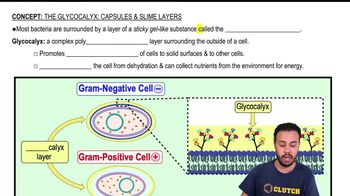
Capsules are gelatinous layers surrounding some bacterial cells that protect them from host immune responses, such as phagocytosis. By preventing engulfment by immune cells, capsules enhance bacterial survival and virulence. For example, Streptococcus pneumoniae’s capsule is a major factor in its ability to cause pneumonia.
Recommended video:
Guided course
02:26
The Glycocalyx: Capsules & Slime Layers

Cell Wall Components and Virulence

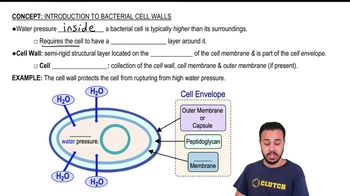
Bacterial cell walls contain molecules like lipopolysaccharides (LPS) in Gram-negative bacteria and teichoic acids in Gram-positive bacteria, which can trigger strong immune responses. LPS acts as an endotoxin causing inflammation and septic shock, as seen in Escherichia coli infections, contributing to pathogenicity.
Recommended video:
Guided course
03:44
Introduction to Bacterial Cell Walls

Interaction Between Capsules and Cell Wall Components in Disease

Capsules and cell wall components often work together to enhance bacterial pathogenicity by evading immune detection and inducing harmful host responses. For instance, Neisseria meningitidis uses its capsule to avoid phagocytosis while its outer membrane proteins and LPS stimulate inflammation, facilitating meningitis development.
Recommended video:
Guided course
03:44
Introduction to Bacterial Cell Walls