Ch. 5 - Microbial Metabolism
Tortora - Microbiology: An Introduction 14th Edition
Tortora14th EditionMicrobiology: An IntroductionISBN: 9780138200398Not the one you use?Change textbook
Chapter 5, Problem 10

What nutritional type is a colorless microbe that uses the Calvin-Benson cycle, uses H₂ as the electron donor to its ETC, and uses elemental S as the final electron acceptor in the ETC?

Verified step by step guidance
1
Identify the key characteristics of the microbe: it is colorless, uses the Calvin-Benson cycle for carbon fixation, uses H₂ (hydrogen gas) as the electron donor, and uses elemental sulfur (S) as the final electron acceptor in its electron transport chain (ETC).
Recall that the Calvin-Benson cycle is a pathway for autotrophic carbon fixation, meaning the organism is a type of autotroph that fixes CO₂ into organic compounds.
Understand that using H₂ as an electron donor indicates the microbe is capable of chemolithotrophy, deriving energy from inorganic molecules (H₂ in this case).
Recognize that using elemental sulfur as the final electron acceptor suggests the microbe performs anaerobic respiration, where sulfur is reduced during the ETC.
Combine these insights to classify the nutritional type: the microbe is a chemolithoautotroph that uses hydrogen as an electron donor, sulfur as an electron acceptor, and fixes carbon via the Calvin-Benson cycle.

Verified video answer for a similar problem:

This video solution was recommended by our tutors as helpful for the problem above.
Video duration:
2m
Was this helpful?

Key Concepts

Here are the essential concepts you must grasp in order to answer the question correctly.

Nutritional Types in Microorganisms

Nutritional types classify microbes based on their energy, electron, and carbon sources. For example, phototrophs use light for energy, chemotrophs use chemical compounds, autotrophs fix CO2 as a carbon source, and heterotrophs use organic carbon. Understanding these categories helps identify how a microbe obtains energy and builds biomass.
Recommended video:
Guided course
03:17
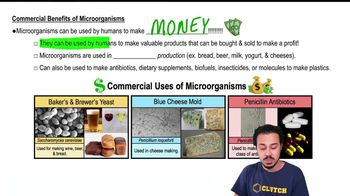
Commercial Benefits of Microorganisms

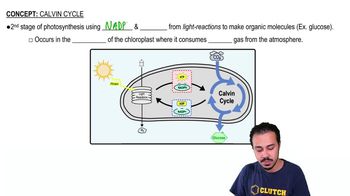
Calvin-Benson Cycle

The Calvin-Benson cycle is a biochemical pathway used by autotrophic organisms to fix carbon dioxide into organic molecules. It requires ATP and reducing power (usually NADPH) to convert CO2 into sugars. Microbes using this cycle are typically autotrophs that synthesize their own carbon compounds from inorganic carbon.
Recommended video:

Electron Transport Chain (ETC) and Electron Donors/Acceptors

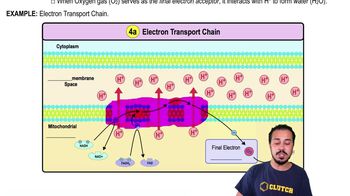
The ETC is a series of protein complexes that transfer electrons from donors to acceptors, generating energy. Electron donors like H2 provide electrons, while acceptors like elemental sulfur (S) receive them. The flow of electrons drives ATP synthesis, and the choice of donor and acceptor defines the microbe's metabolic type.
Recommended video:
Guided course
07:41
Electron Transport Chain