Ch. 49 - An Introduction to Ecology
Freeman - Biological Science 8th Edition
Freeman8th EditionBiological ScienceISBN: 9780138276263Not the one you use?Change textbook
Chapter 49, Problem 5

Which of these statements about aquatic biomes is true? Select True or False for each statement.
T/F The ocean is so vast that it is not influenced by human impacts.
T/F Water depth, water flow, salinity, and nutrient availability are important abiotic factors in aquatic biomes.
T/F Once nutrients sink to the bottom of lakes, they are no longer available to organisms.

Verified step by step guidance
1
Consider the statement about the ocean's vastness and human impact. Reflect on how human activities such as pollution, overfishing, and climate change can affect even large bodies of water like oceans.
Examine the statement regarding abiotic factors in aquatic biomes. Understand that abiotic factors such as water depth, flow, salinity, and nutrient availability play crucial roles in determining the characteristics and life forms in aquatic environments.
Analyze the statement about nutrient availability in lakes. Consider the process of nutrient cycling, including how nutrients can be brought back to the surface through events like turnover or upwelling, making them available to organisms again.
For each statement, apply your understanding of ecological principles and human environmental impact to determine whether the statement is true or false.
Review your answers by considering the broader context of aquatic ecosystems and the interactions between biotic and abiotic factors, ensuring your conclusions align with established scientific knowledge.

Verified video answer for a similar problem:

This video solution was recommended by our tutors as helpful for the problem above.
Video duration:
1m
Was this helpful?

Key Concepts

Here are the essential concepts you must grasp in order to answer the question correctly.

Human Impact on Oceans

Despite their vastness, oceans are significantly influenced by human activities. Pollution, overfishing, and climate change are major human impacts that affect ocean ecosystems. These activities can lead to habitat destruction, loss of biodiversity, and alterations in oceanic chemical compositions, demonstrating that no part of the ocean is immune to human influence.
Recommended video:
Guided course
03:35
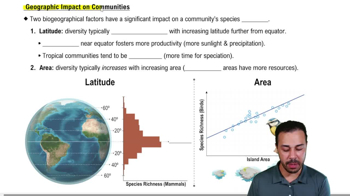
Geographic Impact on Communities

Abiotic Factors in Aquatic Biomes

Abiotic factors such as water depth, flow, salinity, and nutrient availability are crucial in shaping aquatic biomes. These factors determine the types of organisms that can thrive in a particular environment. For example, salinity affects osmoregulation in aquatic organisms, while nutrient availability influences primary productivity and food web dynamics.
Recommended video:
Guided course
01:38
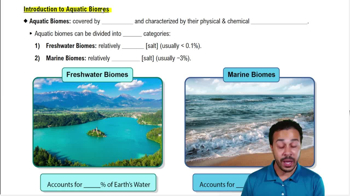
Introduction to Aquatic Biomes

Nutrient Cycling in Aquatic Systems

Nutrients in aquatic systems can sink to the bottom, but they are not permanently lost to organisms. Processes like upwelling and bioturbation can bring these nutrients back to the surface, making them available again. This recycling is essential for maintaining productivity in aquatic ecosystems, supporting the growth of phytoplankton and other primary producers.
Recommended video:
Guided course
03:25
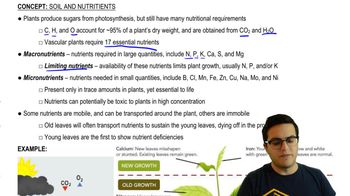
Soil Nutrients