
Ch. 42 - Gas Exchange and Circulation
Freeman - Biological Science 8th Edition
Freeman8th EditionBiological ScienceISBN: 9780138276263Not the one you use?Change textbook
Chapter 42, Problem 2

Identify at least two advantages of breathing air instead of water.

Verified step by step guidance
1
Air is less dense and less viscous than water, which makes it easier and requires less energy for organisms to move air in and out of their respiratory systems compared to water.
Air contains a higher concentration of oxygen compared to water. This allows organisms that breathe air to obtain oxygen more efficiently and effectively than those breathing water.

Verified video answer for a similar problem:

This video solution was recommended by our tutors as helpful for the problem above.
Video duration:
1m
Was this helpful?

Key Concepts

Here are the essential concepts you must grasp in order to answer the question correctly.

Oxygen Availability

Air contains a higher concentration of oxygen compared to water, making it more efficient for organisms to extract the oxygen they need for cellular respiration. This is crucial for sustaining metabolic processes, as oxygen is a key reactant in the production of ATP, the energy currency of cells.
Recommended video:
Guided course
07:27
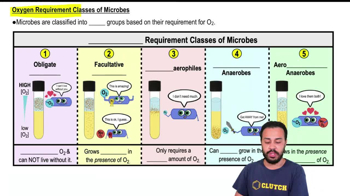
Oxygen Requirement Classes of Microbes

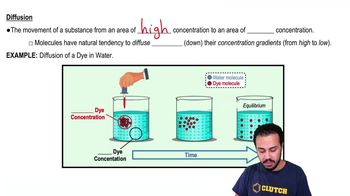
Diffusion Rates

Gases diffuse more rapidly in air than in water due to the lower density and viscosity of air. This means that organisms that breathe air can take in oxygen more quickly and efficiently, allowing for faster respiratory rates and improved energy production.
Recommended video:

Energy Expenditure

Breathing air generally requires less energy than extracting oxygen from water. Aquatic organisms often expend significant energy to move water over their gills, while terrestrial organisms can utilize lungs to efficiently draw in air, leading to lower overall energy costs for respiration.
Recommended video:
Guided course
04:58
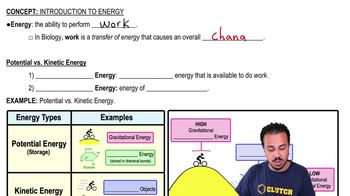
Introduction to Energy