
Textbook Question
When lithium iodide (LiI) is dissolved in water, the solution becomes hotter. c. Sketch a qualitative energy diagram similar to Figure 13.7 for the dissolution of LiI.
967
views

 Verified step by step guidance
 01:23
01:23
 00:49
00:49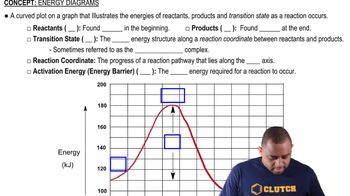 01:57
01:57When lithium iodide (LiI) is dissolved in water, the solution becomes hotter. c. Sketch a qualitative energy diagram similar to Figure 13.7 for the dissolution of LiI.
For each compound, would you expect greater solubility in water or in hexane? Indicate the kinds of intermolecular forces that occur between the solute and the solvent in which the molecule is most soluble. a. glucose
When lithium iodide (LiI) is dissolved in water, the solution becomes hotter. a. Is the dissolution of lithium iodide endothermic or exothermic?
For each compound, would you expect greater solubility in water or in hexane? Indicate the kinds of intermolecular forces that would occur between the solute and the solvent in which the molecule is most soluble. d. ethylene glycol
When lithium iodide (LiI) is dissolved in water, the solution becomes hotter. b. What can you conclude about the relative magnitudes of the lattice energy of lithium iodide and its heat of hydration?