
Here are the essential concepts you must grasp in order to answer the question correctly.
Biodiversity
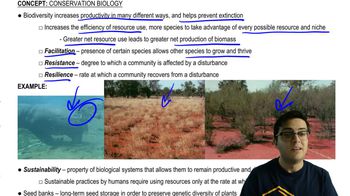
Biodiversity refers to the variety of life forms within a given ecosystem, region, or on the entire planet. It encompasses the diversity of species, genetic variations, and the ecosystems they inhabit. High biodiversity is crucial for ecosystem resilience, providing essential services such as pollination, nutrient cycling, and climate regulation.
Recommended video:
Biodiversity and Sustainability
Biodiversity Hotspot
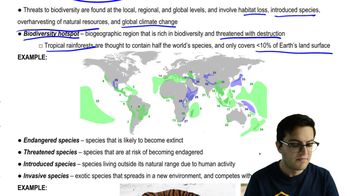
A biodiversity hotspot is a biogeographic region that is both rich in endemic species and significantly threatened by human activities. To qualify as a hotspot, a region must contain at least 1,500 species of vascular plants as endemics and have lost at least 70% of its original habitat. These areas are critical for conservation efforts due to their unique species and the urgent need to protect them.
Recommended video:
Biodiversity Hotspots and Endangered Species
Species Richness and Threat
Species richness refers to the number of different species present in a particular area, while threat levels indicate the degree of danger these species face from factors like habitat destruction, climate change, and pollution. Areas with high species richness that also experience significant threats are prioritized for conservation, as they represent both a unique biological heritage and a critical need for protection.
Recommended video:
Biological Species Concept