Ch. 10 - Host Microbe Interactions and Pathogenesis
Norman-McKay- Microbiology: Basic and Clinical Principles 2nd Edition
Norman-McKay2nd EditionMicrobiology: Basic and Clinical PrinciplesISBN: 9780137661619Not the one you use?Change textbook
Chapter 10, Problem 14

What three main options can a pathogen pursue following adhesion?

Verified step by step guidance
1
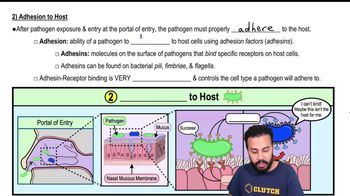
Understand that adhesion is the initial step where a pathogen attaches to host cells, which is crucial for establishing infection.
Identify the three main strategies a pathogen can follow after adhesion: colonization, invasion, or evasion.
Colonization involves the pathogen multiplying and establishing itself on the host surface without necessarily entering host cells.
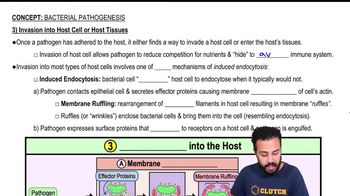
Invasion refers to the pathogen penetrating host tissues or cells to spread deeper into the host.
Evasion means the pathogen avoids the host immune response to survive and persist within the host.

Verified video answer for a similar problem:

This video solution was recommended by our tutors as helpful for the problem above.
Video duration:
3m
Was this helpful?

Key Concepts

Here are the essential concepts you must grasp in order to answer the question correctly.

Adhesion in Pathogenesis

Adhesion is the initial step where a pathogen attaches to host cells using specific molecules called adhesins. This process is crucial for colonization and establishing infection, as it allows the pathogen to resist physical removal mechanisms like flushing by fluids.
Recommended video:
Guided course
03:59
2) Adhesion to Host

Invasion of Host Tissues

After adhesion, some pathogens invade host tissues by penetrating cellular barriers. This allows them to access nutrients, evade immune responses, and spread within the host, often leading to more severe infections.
Recommended video:
Guided course
05:38
3) Invasion into Host Tissues

Evasion of Host Immune Responses

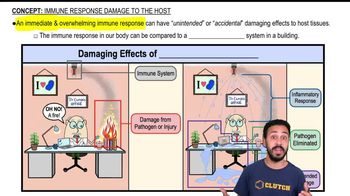
Following adhesion, pathogens may employ strategies to avoid detection or destruction by the host immune system. These include producing capsules, secreting enzymes, or altering surface antigens to persist and multiply within the host.
Recommended video:
Guided course
02:57
Intro to Immune Response Damage