Ch. 1 - Introduction to Microbiology
Norman-McKay- Microbiology: Basic and Clinical Principles 2nd Edition
Norman-McKay2nd EditionMicrobiology: Basic and Clinical PrinciplesISBN: 9780137661619Not the one you use?Change textbook
Chapter 1, Problem 22

What best describes the relationship between host and pathogen?
a. Mutualism
b. Parasitism
c. Commensalism
d. Endosymbiosis

Verified step by step guidance
1
Step 1: Understand the definitions of the terms describing relationships between organisms: Mutualism, Parasitism, Commensalism, and Endosymbiosis.
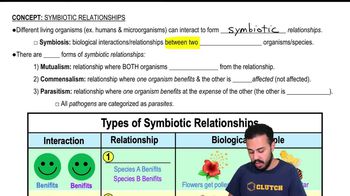
Step 2: Mutualism is a relationship where both organisms benefit from the interaction.
Step 3: Parasitism is a relationship where one organism (the parasite) benefits at the expense of the other (the host), often causing harm.
Step 4: Commensalism is a relationship where one organism benefits while the other is neither helped nor harmed.
Step 5: Endosymbiosis refers to a symbiotic relationship where one organism lives inside the other, often leading to mutual benefit, but it is a specific type of symbiosis rather than a general host-pathogen relationship.

Verified video answer for a similar problem:

This video solution was recommended by our tutors as helpful for the problem above.
Video duration:
1m
Was this helpful?

Key Concepts

Here are the essential concepts you must grasp in order to answer the question correctly.

Parasitism

Parasitism is a type of symbiotic relationship where one organism, the parasite (pathogen), benefits at the expense of the other, the host. The parasite derives nutrients or shelter while harming the host, often causing disease or damage.
Recommended video:

Mutualism

Mutualism is a symbiotic relationship where both organisms benefit from the interaction. In microbiology, this could involve microbes aiding the host in digestion or protection, with both parties gaining advantages.
Recommended video:
Guided course
05:59
Symbiotic Relationships

Commensalism

Commensalism describes a relationship where one organism benefits while the other is neither helped nor harmed. Some microbes live on or in hosts without causing damage or providing benefits, representing this neutral interaction.
Recommended video:
Guided course
05:59
Symbiotic Relationships