Ch. 19 - Digestive System Infections
Norman-McKay- Microbiology: Basic and Clinical Principles 2nd Edition
Norman-McKay2nd EditionMicrobiology: Basic and Clinical PrinciplesISBN: 9780137661619Not the one you use?Change textbook
Chapter 19, Problem 7

Name two ways Shigella can avoid host immune response.

Verified step by step guidance
1
Understand that Shigella is a pathogenic bacterium that causes dysentery and has evolved mechanisms to evade the host immune system to establish infection.
Identify that one common immune evasion strategy of Shigella is its ability to invade and survive within host epithelial cells, thereby avoiding detection by immune cells in the extracellular environment.
Recognize that Shigella can also manipulate the host immune response by injecting effector proteins through its Type III secretion system, which can inhibit inflammatory signaling pathways and prevent the activation of immune defenses.
Summarize that these two strategies—intracellular invasion and immune signaling interference—allow Shigella to effectively avoid or dampen the host immune response.
Note that understanding these mechanisms is crucial for developing treatments or vaccines targeting Shigella infections.

Verified video answer for a similar problem:

This video solution was recommended by our tutors as helpful for the problem above.
Video duration:
2m
Was this helpful?

Key Concepts

Here are the essential concepts you must grasp in order to answer the question correctly.

Intracellular Survival

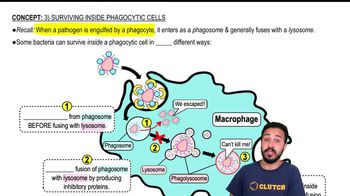
Shigella can invade and survive within host cells, particularly macrophages and epithelial cells, allowing it to evade extracellular immune defenses like antibodies and complement proteins. By residing inside cells, it avoids detection and destruction by many components of the host immune system.
Recommended video:
Guided course
04:18
Surviving Inside Phagocytic Cells

Type III Secretion System (T3SS)

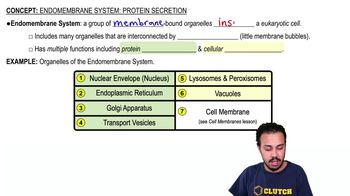
Shigella uses a specialized protein apparatus called the Type III Secretion System to inject effector proteins into host cells. These effectors manipulate host cell processes, suppress immune signaling, and prevent the activation of inflammatory responses, helping Shigella evade immune detection.
Recommended video:
Guided course
04:13
Endomembrane System: Protein Secretion

Antigenic Variation and LPS Modification

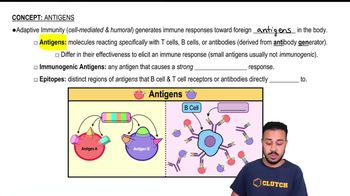
Shigella can alter surface molecules such as lipopolysaccharides (LPS) to avoid recognition by the host immune system. Modifying these antigens reduces the effectiveness of antibodies and helps the bacteria escape immune surveillance.
Recommended video: