
Ch. 14 - Biomedical Applications: Vaccines, Diagnostics, Therapeutics, and Molecular Method
Norman-McKay- Microbiology: Basic and Clinical Principles 2nd Edition
Norman-McKay2nd EditionMicrobiology: Basic and Clinical PrinciplesISBN: 9780137661619Not the one you use?Change textbook
Chapter 14, Problem 15

How could a CRISPR-Cas9 enter a human cell for genome editing purposes?

Verified step by step guidance
1
Understand that CRISPR-Cas9 is a molecular tool composed of the Cas9 protein and a guide RNA (gRNA) that together can target specific DNA sequences for editing.
Recognize that to perform genome editing in human cells, the CRISPR-Cas9 components must be delivered inside the cells, crossing the cell membrane barrier.
Explore common delivery methods such as viral vectors (e.g., lentivirus, adenovirus) which can efficiently transport the CRISPR-Cas9 system into human cells by exploiting the virus's natural ability to infect cells.
Consider non-viral delivery methods like electroporation, where an electric pulse temporarily opens pores in the cell membrane allowing CRISPR-Cas9 molecules to enter, or lipid nanoparticles that encapsulate the CRISPR components and fuse with the cell membrane.
Evaluate the choice of delivery method based on factors like efficiency, cell type, potential immune response, and whether transient or stable expression of CRISPR-Cas9 is desired.

Verified video answer for a similar problem:

This video solution was recommended by our tutors as helpful for the problem above.
Video duration:
3m
Was this helpful?

Key Concepts

Here are the essential concepts you must grasp in order to answer the question correctly.

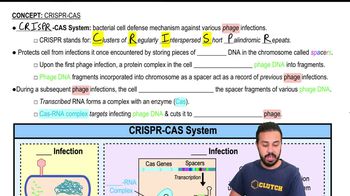
CRISPR-Cas9 System

CRISPR-Cas9 is a genome editing tool derived from a bacterial immune system that uses a guide RNA to direct the Cas9 nuclease to a specific DNA sequence, enabling precise cutting and modification of the genome.
Recommended video:

Cellular Delivery Methods

To introduce CRISPR-Cas9 into human cells, delivery methods such as viral vectors, lipid nanoparticles, or electroporation are used, each facilitating the transport of the CRISPR components across the cell membrane into the cytoplasm or nucleus.
Recommended video:
Guided course
06:29
Scientific Method

Cell Membrane and Nuclear Entry

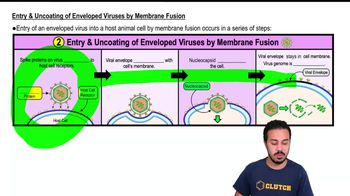
For genome editing, CRISPR-Cas9 must cross the cell membrane and often the nuclear envelope; understanding mechanisms like endocytosis, membrane fusion, or nuclear localization signals is essential to ensure the system reaches the DNA inside the nucleus.
Recommended video:
Guided course
02:59
Entry & Uncoating of Enveloped Viruses by Membrane Fusion