Ch. 18 - Nervous System Infections
Norman-McKay- Microbiology: Basic and Clinical Principles 2nd Edition
Norman-McKay2nd EditionMicrobiology: Basic and Clinical PrinciplesISBN: 9780137661619Not the one you use?Change textbook
Chapter 18, Problem 7

A vaccine against Listeria monocytogenes is a challenge to develop because
a. very few people get Listeria meningitis.
b. the antibody-mediated immune response is not effective against L. monocytogenes.
c. better prevention approaches exist, such as food preparation precautions.
d. vaccinations are not used for foodborne illness.

Verified step by step guidance
1
Step 1: Understand the nature of Listeria monocytogenes infection. It is an intracellular pathogen, meaning it lives inside host cells, which affects how the immune system responds to it.
Step 2: Recognize that antibody-mediated immunity (humoral immunity) is generally effective against extracellular pathogens, but intracellular pathogens like Listeria require a strong cell-mediated immune response for effective clearance.
Step 3: Analyze each option in the context of immune response and disease prevalence: (a) considers disease frequency, (b) addresses immune response type, (c) mentions alternative prevention methods, and (d) refers to vaccination practices for foodborne illnesses.
Step 4: Evaluate why antibody-mediated immunity might not be effective against Listeria, focusing on the importance of T-cell mediated immunity in controlling intracellular bacteria.
Step 5: Conclude that the main challenge in developing a vaccine is related to the type of immune response needed, which is why antibody-based vaccines are less effective against Listeria monocytogenes.

Verified video answer for a similar problem:

This video solution was recommended by our tutors as helpful for the problem above.
Video duration:
1m
Was this helpful?

Key Concepts

Here are the essential concepts you must grasp in order to answer the question correctly.

Listeria monocytogenes and Its Pathogenesis

Listeria monocytogenes is a facultative intracellular bacterium that can invade and survive within host cells, especially macrophages. This intracellular lifestyle allows it to evade some immune defenses, making it a challenging pathogen to target with vaccines that rely on antibody responses.
Recommended video:
Guided course
02:35
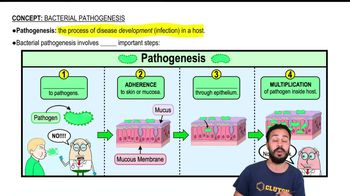
Intro to Bacterial Pathogenesis

Role of Cell-Mediated vs. Antibody-Mediated Immunity

Antibody-mediated immunity primarily targets extracellular pathogens, while cell-mediated immunity, involving T cells, is crucial for controlling intracellular infections like Listeria. Effective vaccines against intracellular bacteria often need to stimulate strong cell-mediated immune responses rather than just antibodies.
Recommended video:
Guided course
02:15
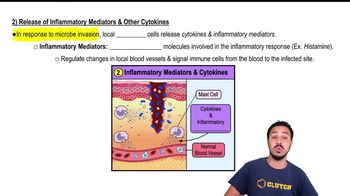
2) Release of Inflammatory Mediators & Other Cytokines

Prevention Strategies for Foodborne Illnesses

Foodborne illnesses like listeriosis are often prevented through proper food handling, cooking, and storage rather than vaccination. Since Listeria infections are relatively rare and controllable by hygiene measures, vaccine development is less prioritized compared to other prevention methods.
Recommended video:
Guided course
04:59
1) Viruses Prevent Antiviral Effects of AVPs
Related Practice
Textbook Question

During a lumbar puncture procedure, the nurse observed that the patient’s CSF pressure was high. However, when the analysis of the CSF sample comes back, the glucose levels are normal. The nurse would most likely suspect:

a. arboviral meningitis.

b. Neisseria meningitidis.

c. Listeria monocytogenes.

d. poliovirus.

1178
views
Textbook Question

A patient who has just immigrated to the United States after serving in the Iraqi army is displaying a bruiselike rash, headache, and sensitivity to light. The doctor will immediately recommend administration of

a. ceftriaxone.

b. penicillin.

c. gentamycin.

d. rifampicin.

1121
views
Textbook Question

A patient under one year old is vomiting, drowsy, floppy (flaccid), and unresponsive. Both infant botulism and infant meningitis caused by other bacteria are suspected. Which piece of information would best help narrow down the possible diagnosis?

a. The child has spent almost no time outside the home.

b. The child is being breast-fed.

c. The child was born one month ago.

d. The child has a very high fever.

1092
views
Textbook Question

CSF glucose levels are often assessed to differentiate between bacterial and viral meningitis. This is because

a. bacteria cells use glucose and lower the overall concentration in the CSF.

b. viral meningitis causes inflammation that blocks glucose transport into the CSF.

c. viral infection of the meninges causes cell lysis, releasing glucose into the CSF.

d. None of the above.

1185
views
Textbook Question

The protists Trypanosoma brucei, Naegleria fowleri, and Toxoplasma gondii

a. invade host cells to cause cellular damage.

b. are only infective in the flagellated form.

c. have a nucleus and are eukaryotic.

d. have all of the above characteristics.

1570
views
Textbook Question

Tetanospasmin and botulinum toxins affect muscles by

a. blocking the action potential traveling from the CNS to the PNS.

b. allowing the bacteria to enter neurons.

c. blocking the relaxation or contraction of the muscles.

d. damaging the axon itself.

1090
views