Ch. 19 - Digestive System Infections
Norman-McKay- Microbiology: Basic and Clinical Principles 2nd Edition
Norman-McKay2nd EditionMicrobiology: Basic and Clinical PrinciplesISBN: 9780137661619Not the one you use?Change textbook
Chapter 19, Problem 12

Why does dietary sugar increase the risk for developing dental caries?

Verified step by step guidance
1
Understand that dental caries (tooth decay) is caused by the demineralization of tooth enamel due to acids produced by bacteria in the mouth.
Recognize that dietary sugars, especially sucrose, glucose, and fructose, serve as substrates for oral bacteria such as Streptococcus mutans.
Know that these bacteria metabolize sugars through fermentation, producing organic acids like lactic acid as byproducts.
Realize that the acids lower the pH in the dental plaque biofilm, leading to enamel demineralization when the pH drops below a critical threshold (around 5.5).
Conclude that frequent consumption of dietary sugars provides a continuous supply of fermentable substrate, promoting acid production and increasing the risk of dental caries development.

Verified video answer for a similar problem:

This video solution was recommended by our tutors as helpful for the problem above.
Video duration:
1m
Was this helpful?

Key Concepts

Here are the essential concepts you must grasp in order to answer the question correctly.

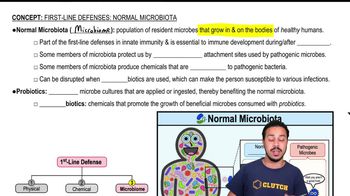
Role of Oral Microbiota in Dental Caries

Dental caries develop when certain bacteria in the mouth, such as Streptococcus mutans, metabolize sugars and produce acids. These acids demineralize tooth enamel, leading to decay. Understanding the interaction between oral bacteria and dietary sugars is essential to grasp how caries form.
Recommended video:
Guided course
03:43
Normal Microbiota

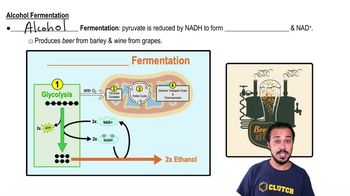
Fermentation of Dietary Sugars

Oral bacteria ferment dietary sugars like sucrose, glucose, and fructose, producing organic acids as byproducts. This acid production lowers the pH in the dental plaque, creating an acidic environment that promotes enamel demineralization and caries development.
Recommended video:
Guided course
02:02
Alcohol Fermentation

Demineralization and Remineralization Balance

Tooth enamel undergoes continuous cycles of demineralization and remineralization. Frequent sugar intake shifts this balance toward demineralization by sustaining acidic conditions, which prevents enamel repair and increases the risk of cavities.
Recommended video:
Guided course
07:29
Magnification, Resolution, & Contrast