Ch. 41 - Animal Nutrition
Freeman - Biological Science 8th Edition
Freeman8th EditionBiological ScienceISBN: 9780138276263Not the one you use?Change textbook
Chapter 41, Problem 1

Calculate and compare the caloric content of skim milk and whole milk. Per serving, skim milk contains 12 g carbohydrates, 8 g protein, and no fat; whole milk contains 12 g carbohydrates, 8 g protein, and 8 g fat.

Verified step by step guidance
1
Calculate the caloric content from carbohydrates: Since both skim milk and whole milk contain 12 g of carbohydrates, and carbohydrates provide 4 calories per gram, multiply 12 g by 4 kcal/g. This gives 12 g x 4 kcal/g = 48 kcal from carbohydrates for each type of milk.
Calculate the caloric content from protein: Both types of milk contain 8 g of protein, and protein also provides 4 calories per gram. Therefore, multiply 8 g by 4 kcal/g. This results in 8 g x 4 kcal/g = 32 kcal from protein for each type of milk.
Calculate the caloric content from fat for whole milk: Whole milk contains 8 g of fat, and fat provides 9 calories per gram. Multiply 8 g by 9 kcal/g to find the caloric content from fat, which is 8 g x 9 kcal/g = 72 kcal.
Add up the total calories for each type of milk: For skim milk, since it contains no fat, the total caloric content is just from carbohydrates and protein, which is 48 kcal + 32 kcal = 80 kcal. For whole milk, add the calories from fat to the calories from carbohydrates and protein, which is 48 kcal + 32 kcal + 72 kcal = 152 kcal.
Compare the caloric content: Whole milk has 152 kcal per serving, while skim milk has 80 kcal per serving. Therefore, whole milk contains nearly twice as many calories as skim milk per serving, primarily due to its fat content.

Verified video answer for a similar problem:

This video solution was recommended by our tutors as helpful for the problem above.
Video duration:
1m
Was this helpful?

Key Concepts

Here are the essential concepts you must grasp in order to answer the question correctly.

Caloric Content Calculation

Caloric content is calculated by summing the calories contributed by macronutrients: carbohydrates, proteins, and fats. Carbohydrates and proteins provide 4 calories per gram, while fats provide 9 calories per gram. Understanding how to calculate the total caloric content from these macronutrients is essential for comparing different food items.
Recommended video:
Guided course
02:10
Mark & Recapture: Calculations & Assumptions

Macronutrients

Macronutrients are the nutrients required in large amounts that provide energy: carbohydrates, proteins, and fats. Each macronutrient plays a distinct role in the body; carbohydrates are the primary energy source, proteins are crucial for growth and repair, and fats are important for energy storage and cellular functions. Knowing the composition of these macronutrients in foods is vital for nutritional analysis.
Recommended video:
Guided course
03:25
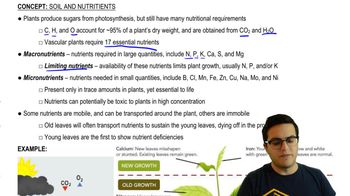
Soil Nutrients

Nutritional Comparison

Nutritional comparison involves evaluating the differences in nutrient composition between food items to determine their health benefits and caloric values. This process helps in making informed dietary choices, as it highlights how variations in fat, protein, and carbohydrate content can affect overall caloric intake and nutritional quality.
Recommended video:
Guided course
05:58
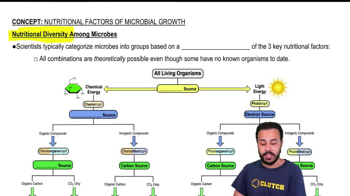
Nutritional Diversity Among Microbes