Ch. 27 - Bacteria and Archaea
Campbell - Campbell Biology 11th Edition
Urry11th EditionCampbell BiologyISBN: 9789357423311Not the one you use?Change textbook
Chapter 27, Problem 2

Photoautotrophs use
a. Light as an energy source and CO₂ as a carbon source
b. Light as an energy source and methane as a carbon source
c. N₂ as an energy source and CO₂ as a carbon source
d. CO₂ as both an energy source and a carbon source

Verified step by step guidance
1
Understand the term 'photoautotrophs': These are organisms that use light energy to synthesize organic compounds from carbon dioxide. They are a type of autotroph, meaning they produce their own food.
Identify the energy source for photoautotrophs: Photoautotrophs use light as their energy source. This is a key characteristic that distinguishes them from other types of autotrophs.
Determine the carbon source for photoautotrophs: Photoautotrophs use carbon dioxide (CO2) as their carbon source. They convert CO2 into organic compounds through the process of photosynthesis.
Evaluate the options given in the problem: Compare each option to the characteristics of photoautotrophs. Option a states 'light as an energy source and CO2 as a carbon source,' which matches the definition of photoautotrophs.
Conclude which option correctly describes photoautotrophs: Based on the analysis, option a is the correct choice as it accurately describes the energy and carbon sources used by photoautotrophs.

Verified video answer for a similar problem:

This video solution was recommended by our tutors as helpful for the problem above.
Video duration:
2m
Was this helpful?

Key Concepts

Here are the essential concepts you must grasp in order to answer the question correctly.

Photoautotrophs

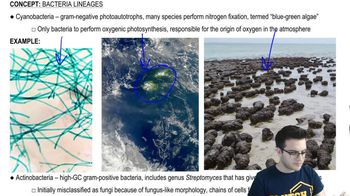
Photoautotrophs are organisms that use light energy to synthesize organic compounds from carbon dioxide. They are a type of autotroph, meaning they produce their own food, and are crucial in ecosystems for converting solar energy into chemical energy through photosynthesis. Common examples include plants, algae, and certain bacteria.
Recommended video:
Guided course
05:13
Prokaryote Lineages 2

Photosynthesis

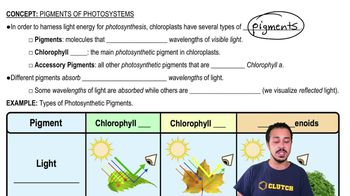
Photosynthesis is the process by which photoautotrophs convert light energy into chemical energy stored in glucose. It involves the absorption of light by chlorophyll, the splitting of water molecules, and the fixation of carbon dioxide into organic compounds. This process not only provides energy for the organism but also releases oxygen as a byproduct, essential for life on Earth.
Recommended video:
Guided course
05:58
Pigments of Photosynthesis

Carbon Source

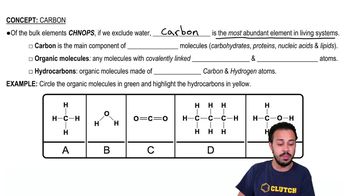
In biological terms, a carbon source is a molecule that provides carbon atoms for the synthesis of organic compounds. For photoautotrophs, carbon dioxide (CO2) is the primary carbon source, which they fix into sugars during photosynthesis. Understanding the carbon source is crucial for distinguishing different types of autotrophs and their ecological roles.
Recommended video: