Understand the context of the question: The meninges are protective layers surrounding the brain and spinal cord. They consist of three layers: dura mater (outermost), arachnoid mater (middle), and pia mater (innermost).
Recall the characteristics of each meningeal layer: The dura mater is tough and fibrous, the arachnoid mater is web-like, and the pia mater is delicate and closely adheres to the surface of the brain and spinal cord.
Identify the innermost layer: The pia mater is the innermost meningeal layer, which is thin and vascularized, providing nutrients to the underlying neural tissue.
Review the options provided in the question: Match the description of the pia mater to the correct choice among the options listed.
Confirm your understanding: Ensure that the answer aligns with the anatomical structure and function of the pia mater as the innermost delicate meningeal layer.
Verified video answer for a similar problem:
This video solution was recommended by our tutors as helpful for the problem above
Video duration:
2m
Play a video:
0 Comments
Key Concepts
Here are the essential concepts you must grasp in order to answer the question correctly.
Meninges
The meninges are three protective membranes that cover the brain and spinal cord. They consist of the dura mater, arachnoid mater, and pia mater. Understanding the structure and function of these layers is essential for identifying their roles in protecting the central nervous system.
The pia mater is the innermost layer of the meninges, directly adhering to the surface of the brain and spinal cord. It is a thin, delicate membrane that contains blood vessels and supports the underlying neural tissue. Its proximity to the nervous tissue makes it crucial for nutrient supply and protection.
The central nervous system (CNS) is organized into distinct anatomical layers, including the meninges. Recognizing the differences between these layers, particularly the protective roles of the dura mater, arachnoid mater, and pia mater, is vital for understanding CNS anatomy and pathology.

 2:12 minutes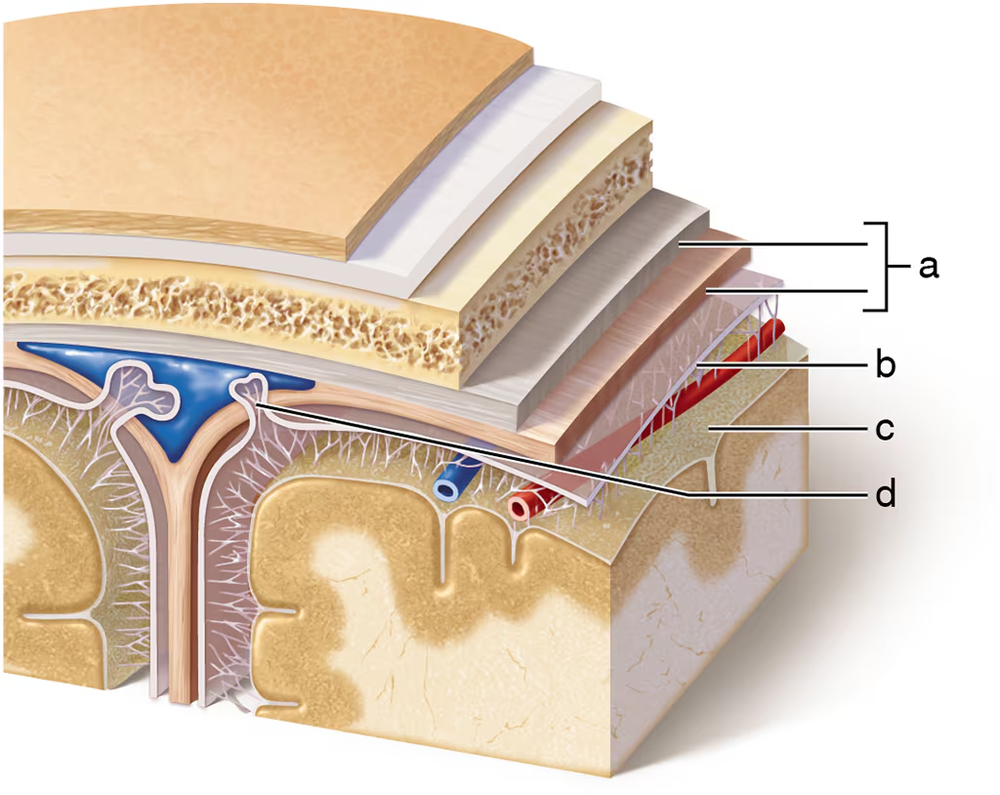
 Verified step by step guidance
 2:10
2:10