Step 1: Understand that a mycotoxin is a toxic secondary metabolite produced by certain species of fungi, which can contaminate food and pose health risks to humans and animals.
Step 2: Recognize that mycotoxins are not essential for the growth or reproduction of the fungi but can have harmful effects when ingested, inhaled, or come into contact with skin.
Step 3: Note that mycotoxins can cause a variety of toxic effects, including acute poisoning, immune deficiency, and carcinogenicity.
Step 4: Identify an example of a mycotoxin, such as aflatoxin, which is produced by Aspergillus species and is known for its potent liver toxicity and carcinogenic properties.
Step 5: Summarize by defining mycotoxin as a fungal toxin harmful to health and providing aflatoxin as a representative example.
Verified video answer for a similar problem:
This video solution was recommended by our tutors as helpful for the problem above
Video duration:
2m
Play a video:
0 Comments
Key Concepts
Here are the essential concepts you must grasp in order to answer the question correctly.
Mycotoxin Definition
Mycotoxins are toxic chemical compounds produced by certain species of fungi. These secondary metabolites can contaminate food and feed, posing health risks to humans and animals by causing poisoning or long-term diseases.
Mycotoxins are mainly produced by molds such as Aspergillus, Penicillium, and Fusarium species. Understanding which fungi produce mycotoxins helps in identifying contamination sources and implementing control measures.
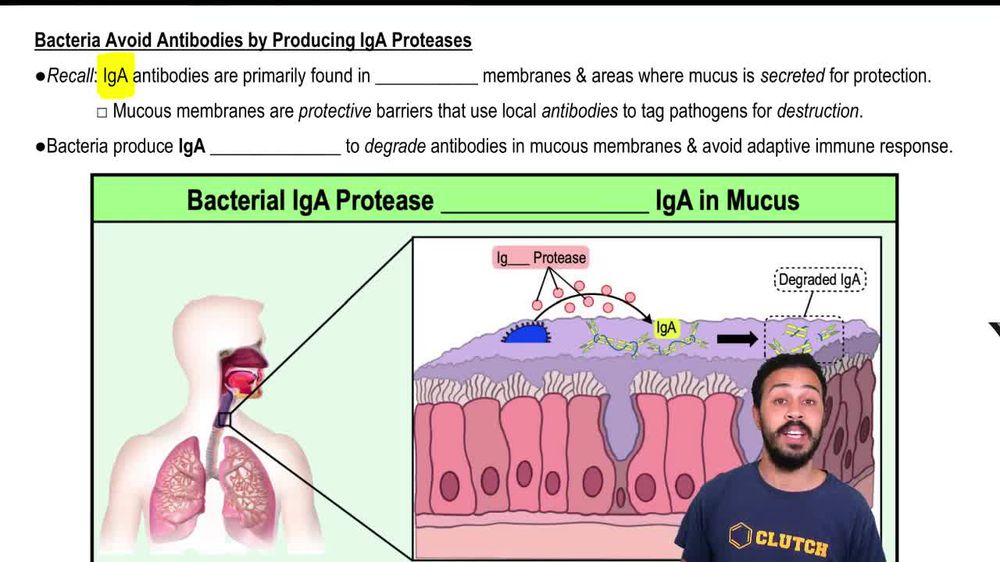
Bacteria Avoid Antibodies by Producing IgA Proteases
Example of a Mycotoxin
Aflatoxin is a well-known mycotoxin produced by Aspergillus species, especially Aspergillus flavus. It is highly toxic and carcinogenic, commonly contaminating crops like peanuts and maize, and is a major concern in food safety.