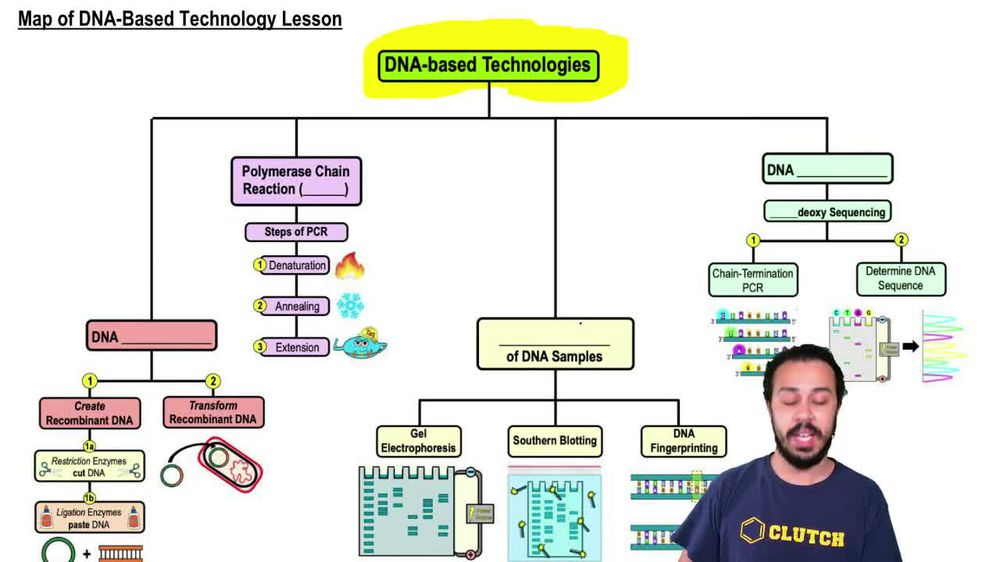
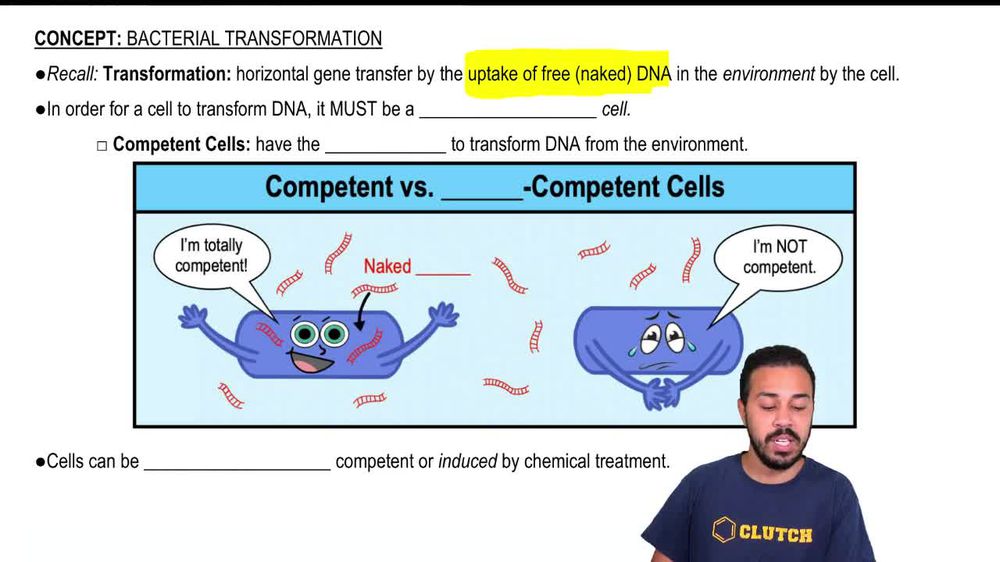
How is Agrobacterium used in recombinant DNA technology?
Verified step by step guidance
1
Understand that Agrobacterium is a genus of bacteria known for its natural ability to transfer DNA to plant cells, which is a key feature exploited in recombinant DNA technology.
Recognize that the Ti plasmid (tumor-inducing plasmid) within Agrobacterium contains a segment called T-DNA, which can integrate into the plant genome, causing crown gall disease naturally.
Learn that scientists modify the Ti plasmid by removing the disease-causing genes within the T-DNA region and replacing them with desired genes to be introduced into the plant.
The modified Agrobacterium is then used to infect plant cells, where it transfers the engineered T-DNA into the plant genome, allowing the plant to express the new gene.
This method is widely used to create genetically modified plants with traits such as pest resistance, herbicide tolerance, or improved nutritional content.
Verified video answer for a similar problem:
This video solution was recommended by our tutors as helpful for the problem above
Video duration:
2m
Play a video:
0 Comments
Key Concepts
Here are the essential concepts you must grasp in order to answer the question correctly.
Agrobacterium tumefaciens and Ti Plasmid
Agrobacterium tumefaciens is a soil bacterium that naturally transfers a segment of its DNA (T-DNA) from the Ti plasmid into plant cells, causing crown gall disease. This natural gene transfer ability is harnessed in biotechnology to introduce desired genes into plants.
Recombinant DNA technology involves combining DNA from different sources to create new genetic combinations. In the context of Agrobacterium, scientists replace the disease-causing genes in the Ti plasmid with beneficial genes, enabling targeted genetic modification of plants.
Using Agrobacterium, foreign genes are inserted into plant genomes by exploiting the bacterium's natural infection mechanism. This method allows stable integration and expression of new traits, such as pest resistance or improved nutrition, in genetically engineered plants.

 2:53 minutes
 Verified step by step guidance
 05:57
05:57